In high-tech coating film manufacturing, a vacuum system plays a critical role in maintaining stable production. Even a minor vacuum system failure can interrupt the entire production line and result in significant downtime and maintenance costs.
Recently, ULVAC Vietnam received an urgent technical support request from a major manufacturing partner. The company’s ULVAC GLD-N280 oil-sealed rotary vane vacuum pump experienced a serious failure after approximately 12 months of operation.
ULVAC Vietnam’s service engineers immediately visited the customer’s factory to inspect the equipment. Through on-site inspection and detailed technical analysis, the team identified the root causes of the failure and implemented a comprehensive solution to prevent the problem from recurring.
1. Initial Condition: Warning Signs from the Vacuum Pump
When ULVAC engineers arrived at the factory, the GLD-N280 vacuum pump was operating under a high-risk condition.
Several abnormal signs were identified:
- Abnormal noise and severe vibration: The pump produced unusual noises and experienced strong vibration during operation. Mechanical seizure also occurred repeatedly.
- Hidden oil loss: The oil level sight glass still showed a normal level. However, the oil mist filter installed above the pump contained a significant amount of accumulated oil. This oil had not been regularly drained or returned to the pump.
- Vacuum pressure appeared normal: The vacuum gauge indicated approximately
-0.094 MPato-0.1 MPa, which was still within the production requirements. As a result, the customer initially considered the vacuum pump to be operating normally.
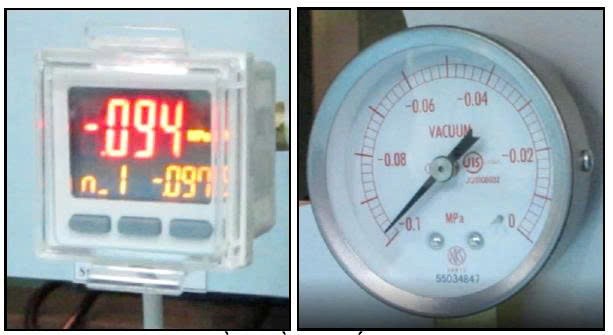
(On-site inspection)
2. Internal Inspection: Both Motors Were Completely Burned Out
Due to the serious signs of mechanical seizure, ULVAC engineers proceeded with an on-site disassembly of the vacuum pump to accurately assess the extent of the damage.
The internal inspection revealed severe damage:
- Complete motor burnout: The electric motors of both pump units were completely burned out. The motors had seized and could no longer start under load.

- Severe oxidation and deposits: The internal metal surfaces of the pump chamber showed significant oxidation. Contaminants and adhesive vapors had accumulated and formed a thick layer of deposits. This buildup seriously restricted the rotational movement of the pump.
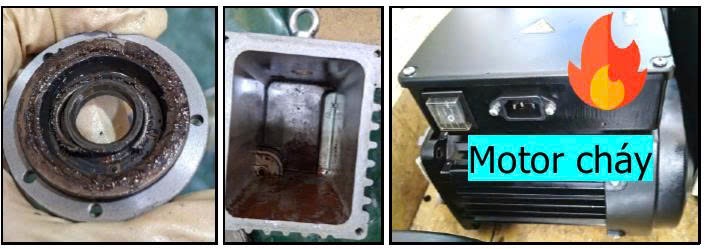
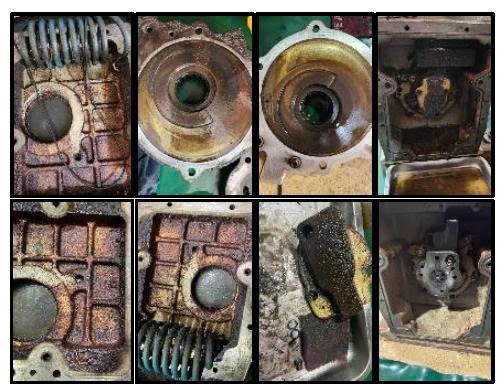
These findings indicated that the problem was not simply an electrical motor failure. The motor burnout was the result of a combination of oil deterioration, contamination, mechanical resistance and prolonged high-load operation.
3. Technical Analysis: Identifying the Root Causes
Based on the on-site inspection and practical experience with vacuum systems, ULVAC Vietnam analyzed the entire chain of events leading to the failure.
The root causes were identified as follows:
Cause 1 – Gradual Loss of Pump Oil
During operation, oil was carried along with the exhaust gas and accumulated inside the oil mist filter.
Because the accumulated oil was not regularly drained or returned to the vacuum pump, the amount of oil available to lubricate and protect the pump gradually decreased.
This created a risk of insufficient lubrication and increased mechanical friction inside the pump.
Cause 2 – Oil Deterioration
Moisture and contaminants entered the vacuum pump during operation.
As a result, the pump oil became diluted and oxidized, causing its lubricating performance to deteriorate.
The increased friction generated additional heat and accelerated the deterioration of the internal pump components.
Cause 3 – Prolonged High-Load Operation
The final critical factor was a small leak in the chamber or vacuum piping system.
Because the system could not maintain the required vacuum level efficiently, the vacuum pump had to operate continuously under a high load.
Although the vacuum gauge could still indicate approximately -0.1 MPa, this reading alone did not reveal the underlying problem.
Combined with oil deterioration and deposits inside the pump, the prolonged high-load operation eventually caused:
Increased friction → Mechanical seizure → Temperature rise → Motor overload → Motor overheating → Motor burnout
This case demonstrates why monitoring only the vacuum pressure is not always sufficient to evaluate the actual health of a vacuum pump.
4. ULVAC Vietnam’s Corrective and Preventive Actions
To restore the production line as quickly as possible and minimize the risk of recurrence, ULVAC Vietnam implemented a two-stage solution.
Stage 1: Emergency Repair and Recovery
The first priority was to restore the vacuum pump to stable operating conditions.
The service team carried out the following work:
- Completely drained the oil accumulated in the oil mist filter.
- Disassembled and thoroughly cleaned the internal pump chamber.
- Removed accumulated contaminants and oxidation deposits.
- Replaced the damaged motors with genuine new motor assemblies.
- Restored and replaced necessary auxiliary components.
- Conducted operational checks after repair to confirm stable pump performance.
Stage 2: System Improvements to Prevent Recurrence
ULVAC Vietnam did not stop at repairing the damaged vacuum pump.
The engineering team also reviewed the overall vacuum system and recommended several improvements to address the root causes of the failure.
1. Installation of an Oil Return Line
An oil return line was designed to connect the SMC AMV3-10 oil mist filter directly to the GLD-N280 vacuum pump. 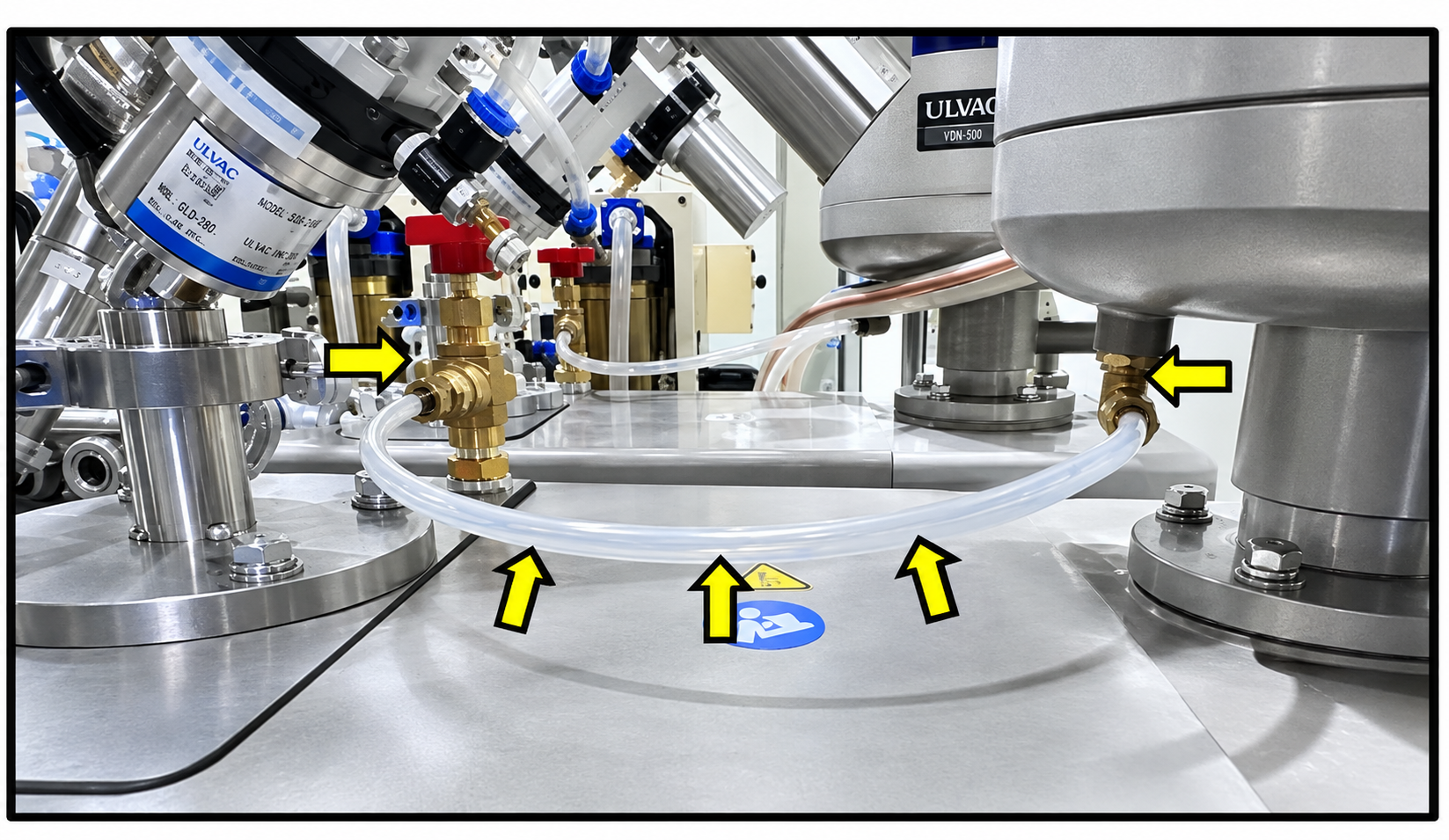
The accumulated oil can therefore be returned to the pump instead of remaining inside the filter.
This solution helps:
- Reduce gradual oil loss.
- Maintain an appropriate oil level inside the pump.
- Improve pump lubrication.
- Reduce the risk of pump damage caused by insufficient oil.
2. Vacuum Leak Testing with Specialized Equipment
ULVAC used a Helium Leak Detector to inspect the chamber and vacuum piping system.
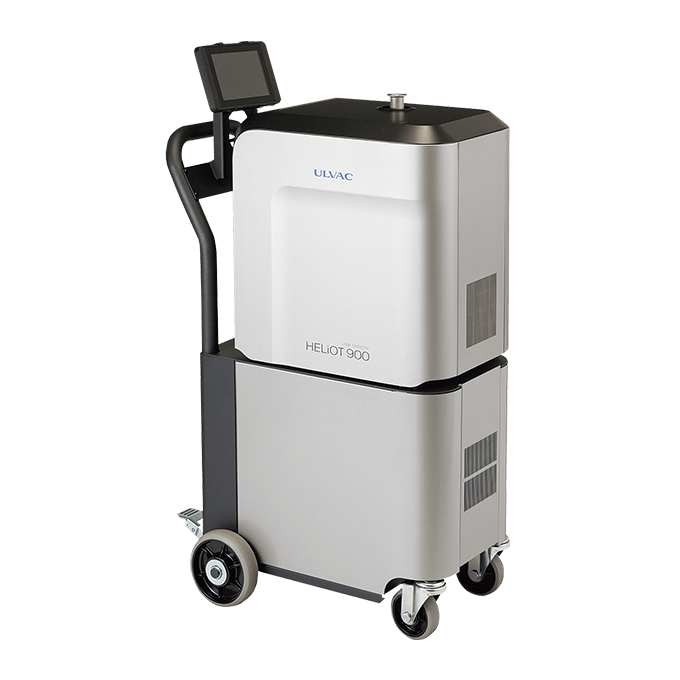
Helium leak testing enables engineers to identify small air leaks that may not be easily detected through conventional vacuum pressure monitoring.
After identifying potential leakage points, corrective actions can be taken to improve the overall vacuum performance of the system.
3. Installation of a Taisei Oil Filtration System
A Taisei oil filtration system was also recommended for the vacuum pump.
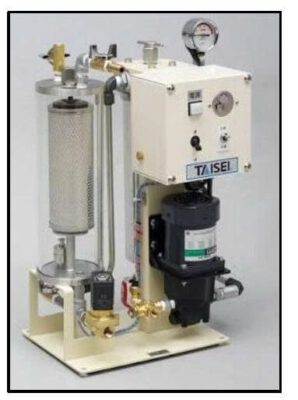
The oil filtration system helps separate water and contaminants from the pump oil before the oil is returned to the vacuum pump.
This helps maintain suitable oil properties and provides better protection against:
- Oil deterioration
- Water contamination
- Oxidation
- Internal pump deposits
- Excessive friction
As a result, the service life and reliability of the vacuum pump can be improved.
4. PLC and HMI Program Improvements
ULVAC Vietnam also recommended improving the system’s PLC and HMI control logic by adding an additional protection algorithm.
The new sequence operates as follows:
- When the vacuum pump starts, the system monitors the vacuum pressure for 15 seconds.
- If the pressure does not reach
-0.1 MPa, the system displays an NG alarm on the HMI. - The system then automatically stops the vacuum pump.
- This helps detect abnormal conditions such as significant vacuum leakage or pump seizure at an early stage.
- By preventing the pump from continuously operating under abnormal load conditions, the system can reduce the risk of motor overheating and burnout.
Results After ULVAC Vietnam’s Service and System Improvement
Thanks to the timely intervention of ULVAC Vietnam, the customer’s vacuum pump was successfully restored and returned to stable operation.
More importantly, the customer was able to improve the overall reliability of the vacuum system rather than simply replacing the failed motor.
The customer also established a new preventive maintenance standard, including:
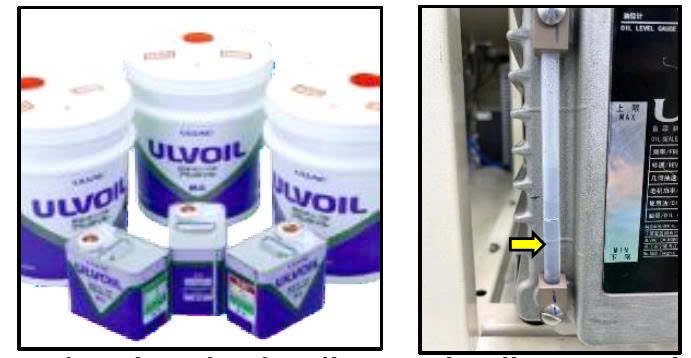
- Check the vacuum pump oil level weekly.
- Replace the pump oil every 3 months.
- Use dedicated ULVAC ULVOIL vacuum pump oil.
- Regularly inspect the oil mist filter and oil return system.
- Monitor vacuum pressure and abnormal pump conditions.
- Conduct vacuum leak testing when abnormal pump-down performance is detected.
These changes allow the factory to take a more proactive approach to GLD-N280 vacuum pump maintenance and significantly reduce the risk of serious equipment failures during production.
Conclusion: Vacuum Pump Failure Is Not Always Just a Pump Problem
The GLD-N280 case shows that a vacuum pump motor burnout can be the result of multiple problems within the overall vacuum system.
Oil loss, oil contamination, vacuum leakage, internal deposits and prolonged high-load operation can interact with each other and eventually lead to mechanical seizure and motor failure.
Therefore, when a vacuum pump shows abnormal noise, vibration, oil consumption or unstable operation, simply replacing the motor may not be enough.
A comprehensive inspection should include:
- Vacuum pump condition
- Pump oil quality and level
- Oil mist filter
- Oil return system
- Vacuum chamber
- Vacuum piping
- Leakage points
- PLC/HMI protection logic

A correct diagnosis of the root cause is essential to prevent the same failure from happening again.
Is Your Vacuum System Experiencing Problems?
Don’t let a small vacuum system problem stop your entire production line.
ULVAC Vietnam provides on-site technical support, vacuum pump inspection, maintenance, leak detection and vacuum system improvement solutions for industrial applications.
Contact ULVAC Vietnam for technical consultation and on-site equipment support.