In modern manufacturing, an Auto Leak Test Machine plays a critical role in verifying product airtightness before shipment.
Driven by the rapid growth of Artificial Intelligence (AI) and Data Centers, demand for Cold Plates, Heat Exchangers, and other liquid cooling components continues to increase. To ensure product quality, manufacturers are increasingly required to perform 100% leak testing before products leave the factory. As a result, Auto Leak Test Machines are often operated continuously under heavy workloads.
After prolonged operation, key vacuum system components—including the Vacuum Pump, Filters, Solenoid Valves, and Vacuum Piping—gradually deteriorate if not maintained regularly.
This can lead to longer evacuation times, reduced leak test accuracy, lower production efficiency, and an increased risk of False NG (false rejects) and False OK (false accepts).
So, which components should be maintained after an Auto Leak Test Machine has been in service for a period of time? This article explains the essential maintenance practices that help ensure long-term stability, high testing accuracy, and extended equipment life.
Why Is Vacuum System Maintenance Important?
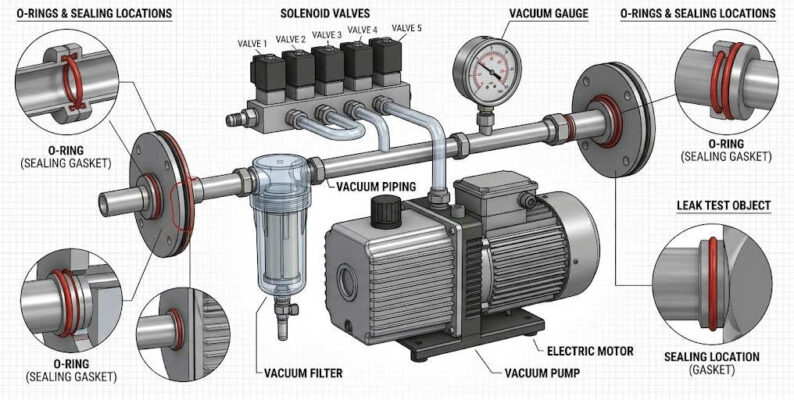
A typical vacuum system in an Auto Leak Test Machine consists of:
- Vacuum Pump
- Filter
- Vacuum Piping
- Solenoid Valve
- Vacuum / Pressure Gauge or Sensor
- O-rings and other sealing components
During continuous operation, dust, oil mist, moisture, and contaminants from tested products gradually accumulate inside the vacuum system, potentially causing:
- Reduced vacuum performance
- Longer Pump Down Time
- Unstable vacuum pressure
- Lower leak test accuracy
- Higher energy consumption
- Shorter vacuum pump service life
Routine maintenance helps prevent these issues and keeps the system operating at peak performance.
6 Critical Components to Inspect Regularly
1. Inspect the Vacuum Pump
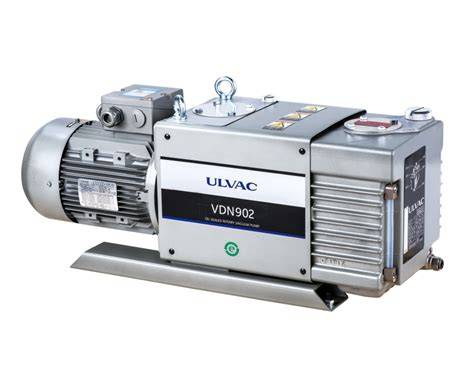
The vacuum pump is the heart of the entire leak testing system and usually operates for the longest hours under the highest load.
Regular inspections should include:
- Oil level (for oil-sealed rotary vane pumps)
- Pump oil condition and color
- Abnormal noise
- Operating temperature
- Vibration level
- Actual pumping speed
If the pump oil becomes dark, contaminated with moisture, or contains particles, it should be replaced immediately to prevent vane wear and loss of pumping performance.
2. Replace Filters Regularly
Clogged filters are one of the most common causes of vacuum system performance degradation.
A blocked filter can result in:
- Reduced pumping speed
- Insufficient vacuum level
- Vacuum pump overload
Key filters to inspect include:
- Inlet Filter
- Exhaust Filter
- Oil Mist Separator
- Air Filter
Replacement intervals depend on:
- Production environment
- Type of products being tested
- Equipment operating hours
3. Inspect Vacuum Piping and Fittings
Over time, vacuum tubing and fittings may experience:
- Aging
- Cracks
- Vacuum leaks
- Loose connections
Even very small leaks can cause:
- Longer Pump Down Time
- Unstable leak test results
- Increased False NG rates
Inspect the following components regularly:
- PU Tubing
- Vacuum Hoses
- Vacuum Fittings
- Push-in Connectors
- Valves
4. Check O-rings and Sealing Components
Rubber sealing components are consumable parts.
After repeated use, they may suffer from:
- Reduced elasticity
- Deformation
- Cracks
- Hardening due to aging
Any of these conditions can compromise sealing performance and directly affect leak test accuracy.
Replacing O-rings as part of preventive maintenance is much more cost-effective than waiting for a failure.
5. Clean Vacuum Valves
Dust, oil mist, and foreign particles can accumulate inside vacuum valves over time.
This contamination may slow valve response and cause:
- Longer testing cycles
- Vacuum pressure fluctuations
- Poor test repeatability
Regular cleaning and functional inspection help maintain consistent system performance.
6. Calibrate Vacuum Sensors
Vacuum sensors may gradually lose accuracy due to:
- Mechanical vibration
- Environmental conditions
- Temperature changes
- Component aging
It is recommended to:
- Perform regular calibration
- Compare readings with certified reference instruments
- Verify signal stability
Proper calibration ensures accurate and reliable leak testing results.
Common Signs Your Vacuum System Needs Maintenance
If you notice any of the following symptoms, it’s time to inspect your equipment:
- Pump Down Time becomes noticeably longer
- Frequent machine alarms
- Longer testing cycles
- Increased vacuum pump noise
- Abnormally high equipment temperature
- Rising NG rate
- Higher power consumption
- Vacuum pump oil turns black quickly or contains contaminants
Timely maintenance helps prevent vacuum pump failures, unexpected production downtime, and costly repairs.
Benefits of Preventive Vacuum System Maintenance
A well-planned maintenance program helps manufacturers:
- Maintain high leak test accuracy
- Reduce Pump Down Time
- Minimize False NG and False OK results
- Lower energy consumption
- Extend vacuum pump and component life
- Reduce unplanned downtime
- Lower total equipment maintenance costs throughout the machine lifecycle
Frequently Asked Questions (FAQ)
1. How often should an Auto Leak Test Machine be maintained?
A preventive maintenance inspection is generally recommended every 3 to 6 months, depending on operating hours and the equipment manufacturer’s recommendations.
2. Which components require the most attention?
The most critical components include the vacuum pump, filters, solenoid valves, vacuum piping, and O-rings.
3. How can I tell if the vacuum system requires maintenance?
Warning signs include longer Pump Down Time, frequent alarms, increased vacuum pump noise, and unstable leak test results.
4. What happens if preventive maintenance is neglected?
Lack of maintenance can reduce testing accuracy, increase cycle time and energy consumption, shorten equipment lifespan, and lead to unexpected production downtime.
5. Does ULVAC Vietnam provide Auto Leak Test Machine maintenance services?
Yes. ULVAC Vietnam provides professional vacuum system inspection, preventive maintenance, consumable replacement, vacuum pump servicing, and system performance optimization.
ULVAC Vietnam – Your Trusted Vacuum System Maintenance Partner
In addition to supplying Auto Leak Test Machines, ULVAC Vietnam provides professional vacuum system maintenance services for industries including automotive, electronics, semiconductors, HVAC, and precision manufacturing.
Our experienced engineers provide:
- Vacuum pump condition inspection
- Genuine vacuum pump oil, filters, and consumable replacement
- Complete vacuum leak inspection
- Vacuum sensor calibration and system performance evaluation
- Preventive maintenance planning to reduce downtime and optimize operating costs
Contact ULVAC Vietnam today to find the right vacuum system maintenance solution for your production line. Keep your Auto Leak Test Machine operating at peak performance, ensure stable and accurate leak testing, and maximize the service life of your entire vacuum system.