Many heat treatment companies are falling into the trap of “false savings” when investing in low-cost vacuum furnaces with unclear origins or without local technical support. At first, the initial investment cost may seem lower. However, in the long run, companies often pay a much higher price through production downtime, repair costs, and rejected products.
Recently, we had the opportunity to support a customer using a vacuum furnace system manufactured in 2021. Despite being relatively new, the system experienced a series of severe failures. As a result, the entire production line had to stop operating.
The customer attempted to contact the original supplier several times but could not receive timely or effective support. Therefore, they urgently requested ULVAC Vietnam’s engineering team to inspect the system and evaluate its condition.
The on-site inspection revealed multiple serious technical issues. More importantly, this case clearly demonstrates the risks of investing in low-cost equipment.
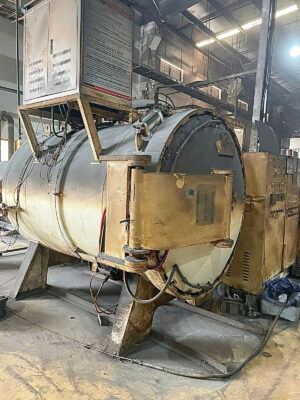
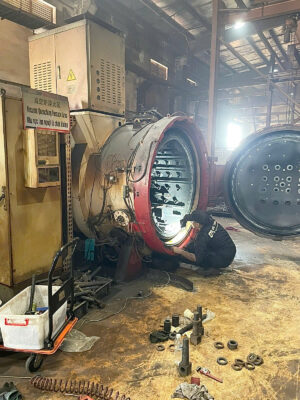
Real Case Study: Low-Cost Vacuum Furnace System After Less Than 5 Years of Operation
 |
 |
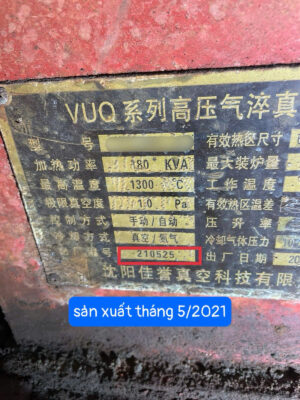 |
Actual on-site condition of the furnace system
Based on the inspection results, it became clear that the Total Cost of Ownership (TCO) had increased significantly because the initial investment decision prioritized low price over long-term reliability.
1. Severe Hardware Deterioration
After only a few years of operation, several critical components had already suffered major damage.
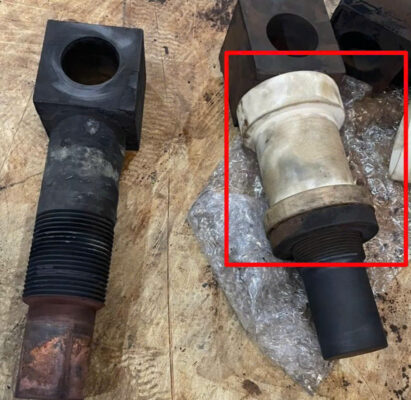
Damaged Ceramic Insulators
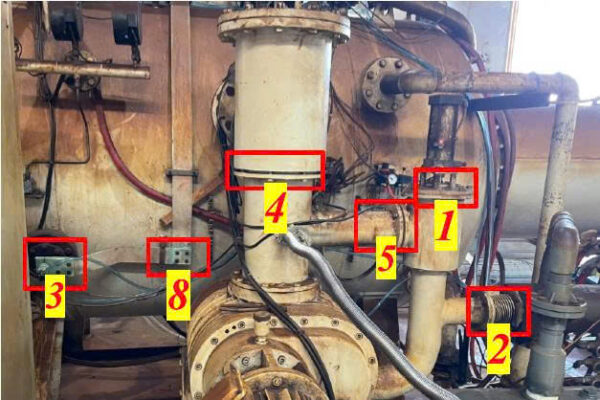
Two electrode positions were found with severely damaged ceramic insulators. As a result, the risk of electrical leakage and electrical short circuits became extremely high.
Multiple Vacuum Leaks
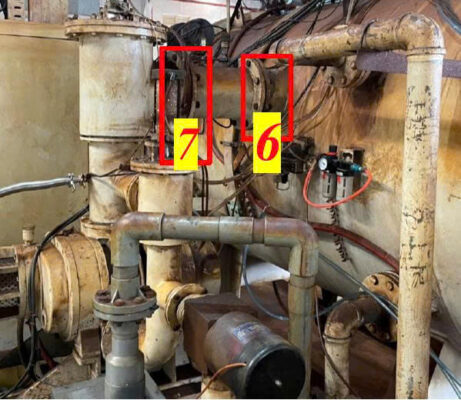
The system had at least seven vacuum leakage points. In addition, several flanges and door seals were heavily damaged.
Unfortunately, the customer did not have genuine spare parts available. Moreover, replacement parts required a very long procurement lead time, while technical support from the original maker was limited and insufficient.
 |
 |
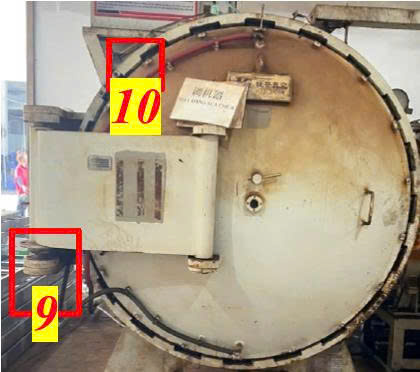
Rusted Mechanical Structure and Sagging Furnace Door
The furnace door showed severe rust and mechanical sagging. Consequently, door operation became difficult and time-consuming.
2. Product Quality Could No Longer Be Controlled
One of the most serious consequences of low-cost vacuum furnaces is unstable temperature performance.
Excessive Temperature Deviation
Even after temporary repairs using old spare parts, the temperature uniformity deviation still remained at approximately ±20°C.
With such a large deviation, many high-precision products were at serious risk of becoming defective or rejected.
Hidden Electrical Discharge
Electrical discharge phenomena were also detected due to poor electrical contact conditions. Therefore, the heat treatment process became unstable and product quality became difficult to control consistently.
3. Maintenance Nightmare: The More Repairs, the Worse It Became
Maintenance and troubleshooting became extremely difficult because the customer could not receive proper technical support from the original maker.
Temporary Parts Replacement
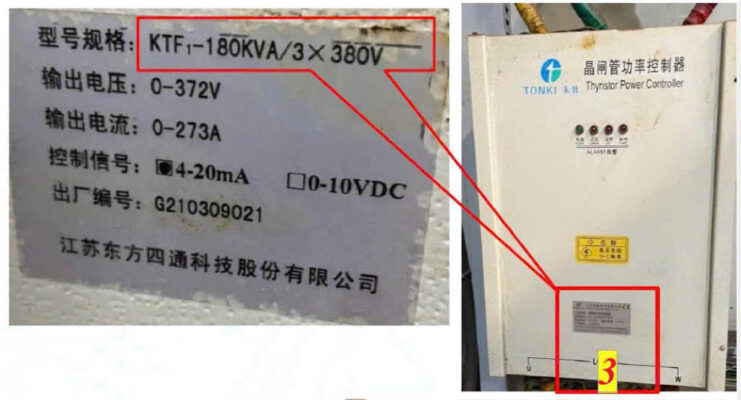
The customer had to remove a KTF1 controller from an older furnace and install it into the newer system. However, the furnace still operated unstably and continued generating new errors.
Technical Troubleshooting Reached a Dead End
The local maintenance team could not accurately identify the electrical leakage source. Furthermore, several PLC-related issues required deep maker-level access and expertise for proper diagnosis and repair.
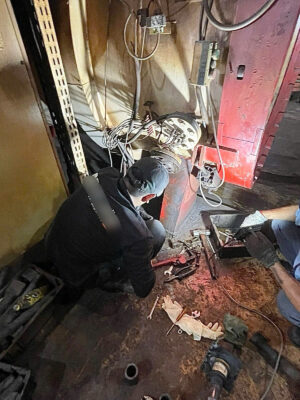
Actual photos from the customer’s factory showing continuous daily system errors
Complete Contrast: ULVAC Vacuum Furnaces Still Operating Reliably After More Than 6 Years
While many low-cost systems begin experiencing severe deterioration after only a few years, many ULVAC vacuum furnaces continue operating stably even after more than six years of service.
In particular, temperature uniformity and vacuum performance still meet the strict requirements of high-precision heat treatment applications.
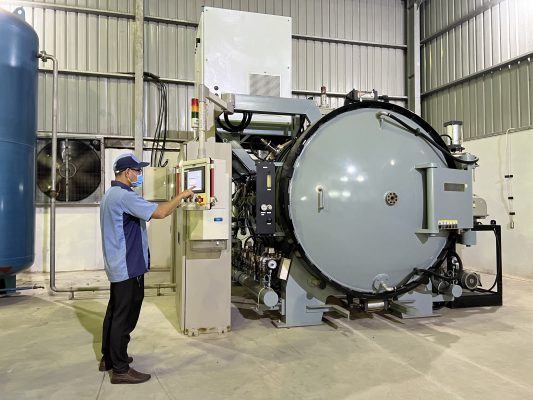
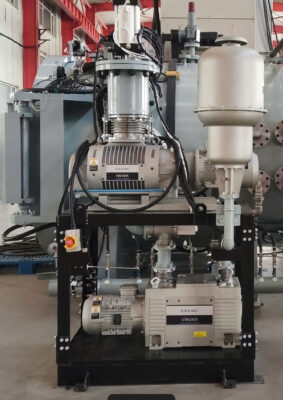
Actual ULVAC furnace installed at the customer’s factory after more than 6 years of operation |
 |
In addition, ULVAC systems are designed using high-quality heat-resistant materials, robust mechanical structures, and fully integrated components. Therefore, issues such as door sagging, vacuum leakage, or ceramic insulator failure are significantly minimized when proper preventive maintenance is performed.
Another major difference is long-term technical support capability.
ULVAC Vietnam maintains a dedicated local support engineering team together with genuine spare parts availability. As a result, customers can significantly reduce downtime and maintain stable production over many years.
In reality, the initial purchase price may be higher. However, when considering equipment lifetime, operational stability, and long-term maintenance costs, ULVAC systems provide far better Total Cost of Ownership (TCO) optimization.
FAQ – Frequently Asked Questions About Vacuum Furnace Investment and Maintenance
1. Why does a vacuum furnace fail seriously after only a few years?
For many low-cost furnaces, manufacturers reduce material and component costs. For example, low-grade ceramic insulators and non-standard electronic components are often used.
As a result, the system may deteriorate rapidly within only 3–5 years of operation. In contrast, premium systems such as ULVAC vacuum furnaces are designed for stable operation over decades.
2. Can I repair electrical leakage or PLC errors by myself?
In most cases, it is extremely difficult.
Many electrical leakage points cannot be visually detected. In addition, PLC-related failures often require access to maker-specific diagnostic programs and parameters.
3. Is it safe to reuse spare parts from old machines?
This should only be considered a temporary emergency solution and carries significant risks.
In this actual case, the system still operated unstably even after replacing parts with older components. Furthermore, the temperature deviation still exceeded the acceptable range at ±20°C.
4. Why should customers choose ULVAC Vietnam instead of third-party repair services?
ULVAC Vietnam has a dedicated Local Support engineering team with deep expertise in vacuum technology and heat treatment systems.
In addition, we maintain genuine spare parts availability to ensure fast and reliable troubleshooting support. As a result, customers can minimize downtime and avoid repeated temporary repairs.
Don’t Let Your Factory Become the Next Case Study
Low initial investment cost does not mean low operating cost.
On the contrary, choosing the wrong equipment may result in much higher losses through downtime, unstable product quality, and expensive maintenance.
You can also learn more in our detailed article analyzing the Total Cost of Ownership (TCO) of vacuum furnace systems.
Therefore, contact ULVAC Vietnam today for professional consultation on proper equipment investment and long-term maintenance solutions.