When investing in a vacuum furnace, businesses often focus solely on the initial price. However, there is a vital factor frequently overlooked: the difference between a “Maker” (Original Manufacturer) and an “Assembler” (System Integrator).
This distinction will determine your entire operational efficiency for the next 5–10 years.
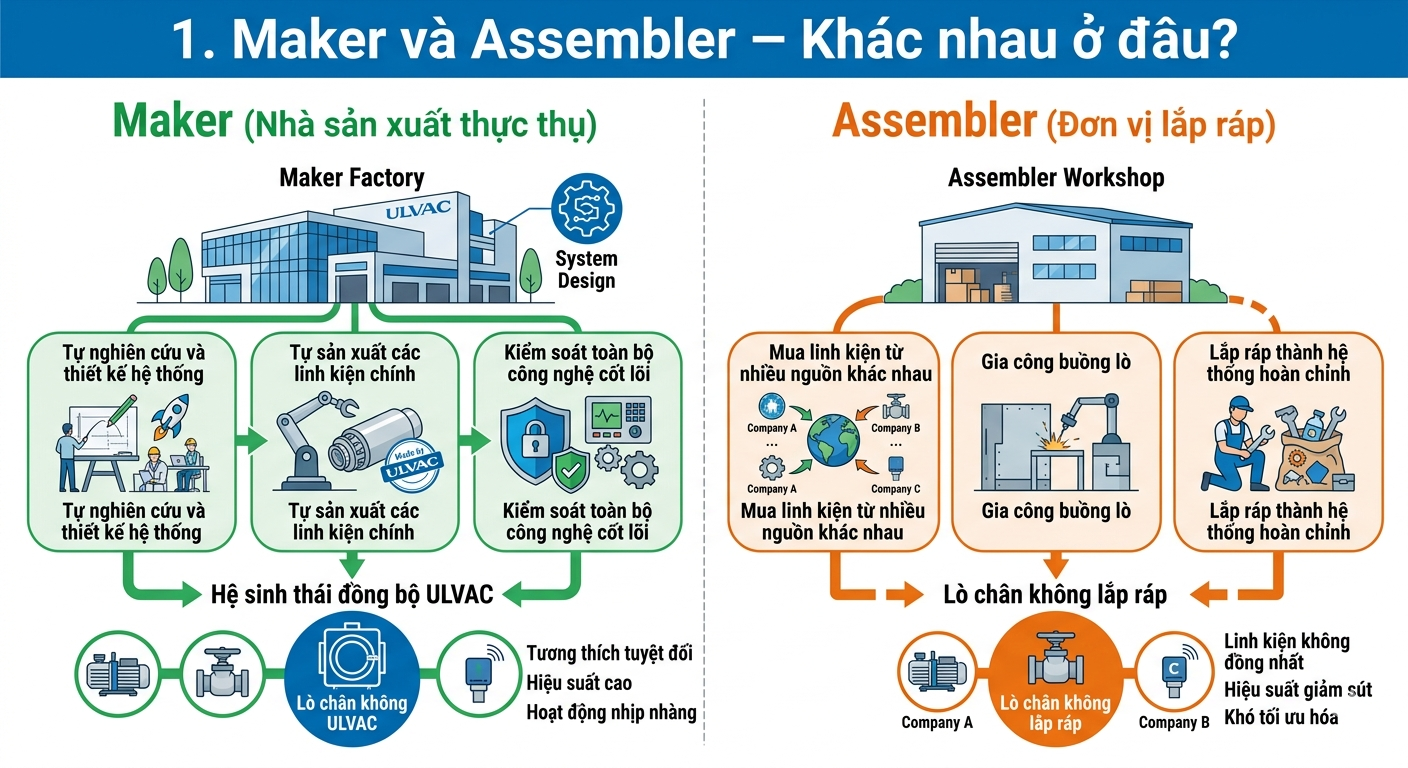
1. Maker vs. Assembler of vacuum furnace– What is the Difference?
First of all, we need to understand the core nature of these two business models.
Maker (The True Manufacturer)
A Maker is a technology-driven company that owns the original IP. Specifically, they have the capability to:
-
Design the entire system from scratch.
-
Manufacture core components in-house.
-
Maintain complete technical control.
For example, components like vacuum pumps, valves, and control systems belong to the same ecosystem. As a result, the entire machine operates with perfect harmony.
Assembler (The System Integrator)
In contrast, an Assembler purchases separate components from various sources. They typically:
-
Source parts from multiple suppliers.
-
Fabricate the furnace chamber locally.
-
Assemble them into a complete system.
Consequently, their components are often mismatched. They were not designed to work together optimally, leading to hidden inefficiencies.
2. Major Risks of an “Assembled” Vacuum Furnace
Initially, an assembled system may perform adequately. However, over time, several issues begin to surface.
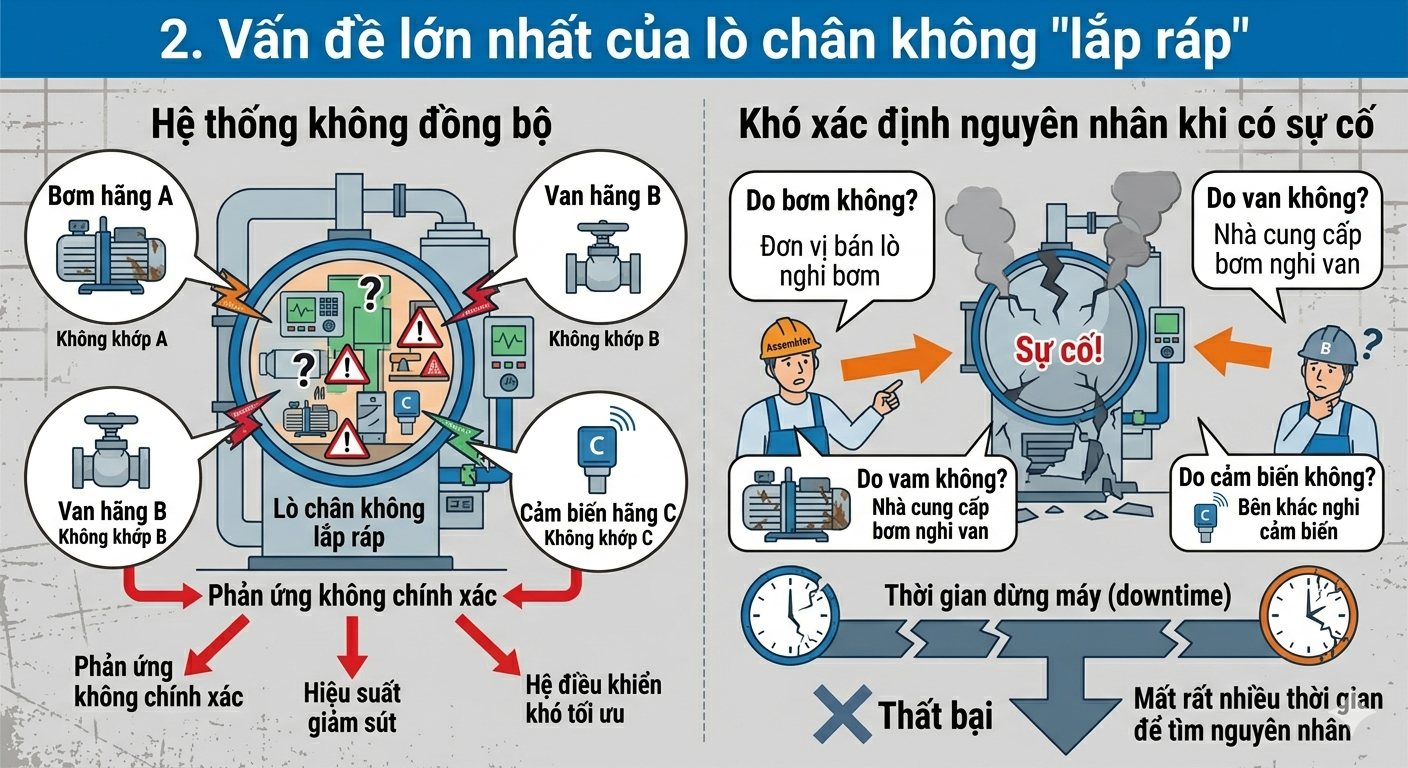
System Incompatibility
For instance, a pump from Brand A and a valve from Brand B may have different operational specs. Consequently, the control system is difficult to optimize, which reduces the overall system performance.
Difficulty in Troubleshooting
When a furnace fails, the biggest question is: Where is the fault?
-
First, the furnace seller might blame the pump.
-
Next, the pump manufacturer might suspect the valve.
As a result, businesses lose significant time waiting for answers. This leads to prolonged downtime and massive production losses.
3. Real-world Troubleshooting about vacuum furnace at the Factory
In production, every hour of downtime is costly. Therefore, coordinating with multiple suppliers becomes a major obstacle.
Conversely, with a synchronized system from a Maker like ULVAC:
-
All components are provided by a single manufacturer.
-
Engineers possess a deep understanding of every machine detail.
-
Furthermore, a single engineer can diagnose and fix all issues on-site.
This rapid response minimizes economic losses for the enterprise.
4. Long-term Quality and Operating Costs about Vacuum furnace
Component Quality
To lower the initial price, Assemblers often use cheaper parts. A typical example is low-quality oil rotary vacuum pumps. These lead to rapid oil contamination and shorten the machine’s lifespan.
Total Cost of Ownership (TCO)
Evidence shows that the biggest cost is not the purchase price. It lies in maintenance and downtime. Therefore, a “cheap” furnace can become extremely expensive after just a few years of operation.
5. ULVAC – Synchronized System from Design to Operation
ULVAC is a true Maker with a complete vacuum ecosystem. Notably, everything from pumps and valves to control systems is “all-in-one.”
In summary, choosing ULVAC provides the following benefits:
-
Operation: Fast response and precise control.
-
Stability: Durable performance with minimal minor faults.
-
Support: A single point of contact for all technical needs.
-
Optimization: Minimized long-term downtime and costs.
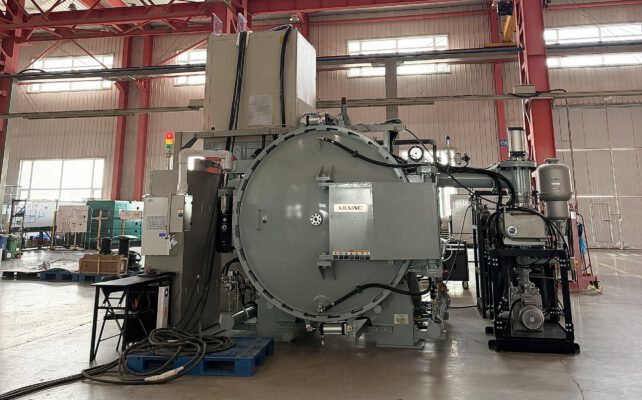
Actual image of ULVAC’s COMBAT series vacuum furnace trusted by customers.
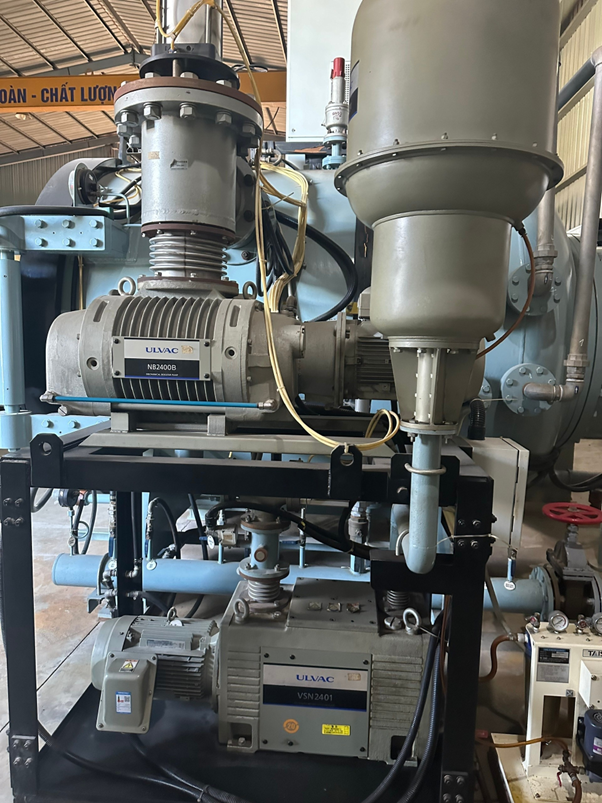
The vacuum pump system of an ULVAC COMBAT furnace still looks new and runs perfectly after 6 years of use.
Conclusion
The difference between a Maker and an Assembler lies in long-term stability. That is why leading enterprises always prioritize Makers for peace of mind in production.
FAQ
-
Are Assemblers always bad? Not necessarily, but the risk of failure and incompatibility is much higher.
-
Why choose a Maker? Because you receive the fastest and most synchronized technical support.
-
What criteria should I use? The advice is to calculate the operating costs over at least 10 years.
Contact for Expert Consultation If you need a stable vacuum furnace system, contact ULVAC Vietnam today.