An oil mist trap is an important component in vacuum systems that use oil-sealed vacuum pumps. It helps separate oil mist from the exhaust gas. As a result, it reduces the amount of oil released into the surrounding environment.
However, after a period of operation, an oil mist trap may experience various problems. The most common signs include white smoke coming from the exhaust outlet, oil accumulating on the surface, or oil leakage around connections.
These issues can increase maintenance costs and affect the working environment. Therefore, identifying the correct cause is essential. In this article, ULVAC Vietnam explains common oil mist trap problems and provides effective solutions.
1. What Is an Oil Mist Trap for a Vacuum Pump?
An oil mist trap is a device installed on the exhaust line of certain oil-sealed vacuum pumps. Its main function is to capture oil mist particles carried by the exhaust gas.
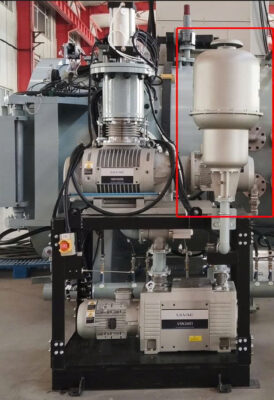
During operation, the exhaust gas may contain small oil droplets. When the gas passes through the filter element, oil particles are captured and coalesce. The collected oil is then recovered according to the design of the device.
As a result, the oil mist trap helps reduce oil mist emissions from the exhaust. It also helps keep the surrounding installation area cleaner.
However, filtration performance depends on several factors:
- Filter element: Must be suitable for the gas flow rate and operating conditions.
- Sealing gasket: Helps prevent gas from bypassing the filter element.
- Fixing mechanism: Keeps the filter element securely in position during operation.
- Oil recovery line: Helps collect condensed oil and reduce leakage.
- Operating conditions: Gas flow rate and oil mist characteristics can affect filtration performance.
Therefore, when oil separation performance decreases, the entire oil mist trap assembly should be inspected.
2. Signs That an Oil Mist Trap Is Not Working Effectively
2.1. White Smoke Coming from the Exhaust Outlet
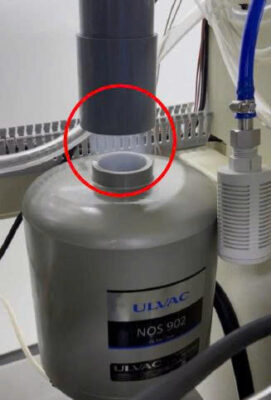
White smoke or continuous oil mist coming from the exhaust outlet may indicate that the oil mist trap is not operating effectively. This condition should be inspected, especially when the amount of smoke increases abnormally.
One possible cause is a displaced gasket or an improperly secured filter element. In this case, exhaust gas containing oil mist may bypass the filter material.
However, not every case of white smoke is caused by the oil mist trap. Therefore, it is important to distinguish oil mist from condensed water vapor before determining the cause.
2.2. Oil Accumulating on the Oil Mist Trap Surface
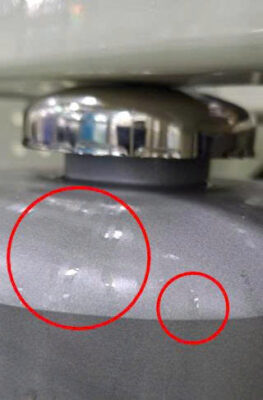
Oil accumulating around the body of the device may be caused by insufficiently sealed connections. A damaged gasket can also result in oil leakage.
If the problem is not addressed promptly, oil may spread to surrounding equipment. This can increase cleaning time and affect the working environment.
Therefore, the exact leakage point should be identified before carrying out repairs.
2.3. Oil Loss Through the Oil Recovery System
The oil recovery system is designed to collect condensed oil. However, an unsuitable pipe arrangement may cause oil to accumulate or escape from the system.
In addition, poorly sealed connections can reduce oil recovery efficiency. Therefore, both the recovery piping and connection points should be inspected when abnormal oil loss is detected.
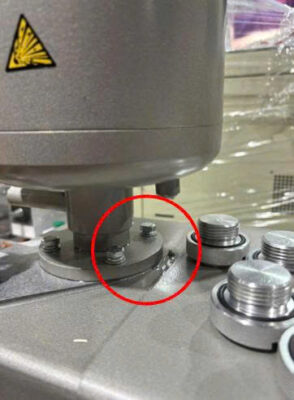
Excessive oil accumulation on the vacuum pump
3. Causes of Smoke from an Oil Mist Trap
3.1. Displaced or Damaged Rubber Gasket
The rubber gasket provides sealing between components in the oil mist trap assembly. When the gasket becomes displaced, a gap may form at the contact area.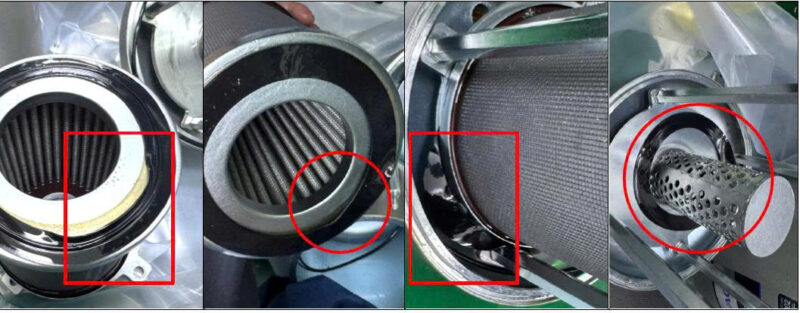
As a result, some exhaust gas containing oil mist may bypass the filter element. This reduces oil separation efficiency and allows oil mist to escape through the exhaust outlet.
Common causes include:
- The gasket was installed incorrectly.
- The gasket has aged or become deformed.
- The filter fixing mechanism is not sufficiently stable.
- Components were not installed according to the required technical specifications.
How to fix it: First, check the position and condition of the gasket. If the gasket is damaged, replace it with a suitable component. At the same time, inspect the fixing mechanism to prevent the gasket from becoming displaced again.
3.2. Clogged or Deteriorated Filter Element
The filter element plays a direct role in the oil mist separation process. After prolonged use, oil and contaminants may accumulate on the filter material.
As a result, gas flow resistance may increase. If the filter element is damaged or unsuitable for the application, oil mist separation performance may also decrease.
To address this issue, maintenance engineers should:
- Inspect the condition of the filter element.
- Check the differential pressure if measurement facilities are available.
- Clean the filter element if permitted by the manufacturer.
- Replace the filter element if it is damaged or has reached its service life.
In particular, the filter element must be compatible with the equipment. A deteriorated filter element should not be kept in service simply to reduce short-term consumable costs.
3.3. Improper Filter Fixing Mechanism
The filter element must remain stable throughout operation. However, some designs may allow the filter assembly to move if the positioning mechanism is not suitable.
Vibration may contribute to changes in the position of components. As a result, the sealing gasket may also become displaced.
To address this problem, check the stability of the entire assembly. If necessary, consider adding an appropriate positioning or fixing component that is compatible with the equipment design.
Any modification should be technically evaluated and confirmed. In particular, do not arbitrarily change dimensions in a way that could over-compress the gasket or restrict gas flow.
3.4. Insufficiently Sealed Oil Recovery Piping
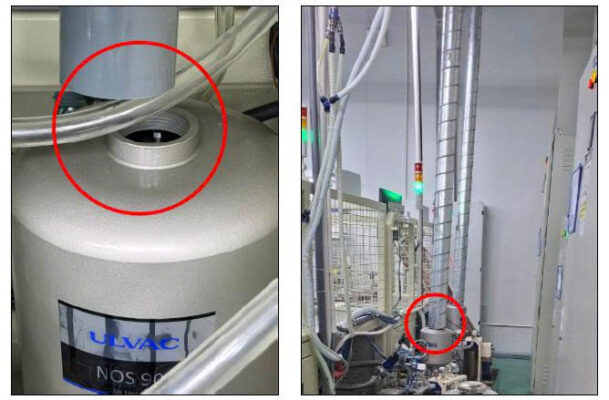
An improperly sealed oil recovery line may cause oil to leak from connection points. In addition, an unsuitable pipe arrangement may lead to the accumulation of condensed oil.
To minimize this problem, inspect all connection points and check whether the oil can drain properly. If necessary, a threaded connection compatible with the equipment design may be considered.
However, a threaded connection does not automatically guarantee complete sealing. Therefore, an appropriate sealing method should be selected, followed by a leak check after installation.
4. Solutions to Improve Oil Mist Trap Performance
After identifying the cause, the factory can select an appropriate corrective action. The following solutions should be considered.
4.1. Secure the Filter Element and Maintain Gasket Sealing
First, make sure that the filter element is installed in the correct position. The gasket must also remain properly positioned in the sealing area.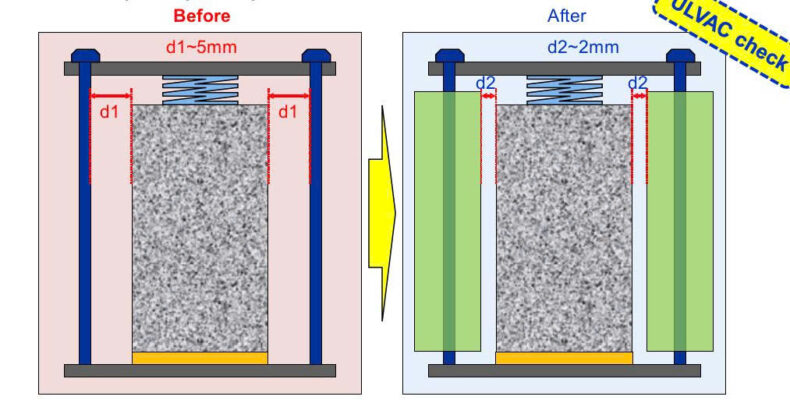
If the existing fixing mechanism is not sufficiently secure, an additional spacer or positioning mechanism may be considered. This solution helps minimize movement of the filter element during operation.
However, any modification must be compatible with the actual equipment structure. It must also prevent gasket deformation and avoid restricting gas flow.
4.2. Improve Piping Connections
All connections should provide adequate sealing and withstand the actual operating conditions. If a connection is found to be loose or unsuitable, an alternative connection method should be evaluated.
For example, a compatible threaded connection may be used if permitted by the equipment design. After installation, maintenance engineers should check the sealing performance of all connections.
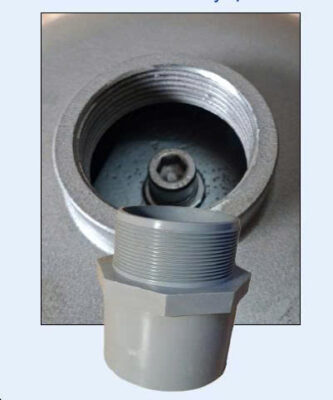
This can help reduce the risk of oil leakage around connection points.
4.3. Optimize the Oil Recovery Piping
The oil recovery line should be arranged so that condensed oil can flow back to the collection point. The design should also minimize areas where oil can accumulate.
For some systems, an additional collection point or suitable oil drain valve may be considered. This can make cleaning and maintenance more convenient.
However, the system design should be evaluated before adding any components. In particular, the modification must allow safe maintenance work and must not interfere with system operation.
4.4. Establish a Regular Maintenance Plan
Regular maintenance helps detect abnormal conditions at an early stage. This allows the factory to address potential problems before they affect production.
The inspection plan should include:
- Condition of the filter element and rubber gasket.
- Stability of the filter fixing mechanism.
- Sealing condition of connection points.
- Condition of the oil recovery piping.
- Signs of abnormal oil mist or oil accumulation.
In addition, the manufacturer’s recommended inspection and replacement intervals should always be followed.
5. Inspection Procedure for an Oil Mist Trap When Oil Mist Appears
To solve the problem effectively, maintenance engineers should follow a systematic inspection procedure.
Step 1: Identify the Source of the Problem
First, observe where the oil mist or smoke is coming from. At the same time, check whether oil has accumulated on the device body or around connection points.
Step 2: Inspect the Filter Element and Gasket
After stopping the equipment and safely isolating the system, inspect the condition of the filter element.
Next, check the position and condition of the rubber gasket.
Step 3: Check the Fixing Mechanism
Evaluate the stability of the filter assembly. If any component is loose or has moved from its original position, determine the cause before reinstalling the components.
Step 4: Inspect the Oil Recovery Piping
Check the sealing condition of all connections. At the same time, identify any areas that could cause oil accumulation or leakage.
Step 5: Repair and Evaluate the Results
Carry out repairs or replace components according to the applicable technical instructions.
Afterward, perform a test run under appropriate operating conditions and monitor the oil mist level.
Finally, compare the condition before and after the corrective action. The evaluation should be performed under comparable operating conditions to determine the actual effectiveness of the solution.
6. Benefits of Optimizing an Oil Mist Trap
Maintaining an oil mist trap in proper operating condition can provide several benefits for industrial facilities:
- Reduce oil mist emissions: Helps control the amount of oil released into the environment when the root cause is properly addressed.
- Improve oil recovery: Reduces oil loss through connection points and supports the collection of condensed oil.
- Reduce cleaning time: Helps minimize oil accumulation on equipment surfaces and surrounding areas.
- Optimize maintenance costs: Early detection of abnormal conditions can help reduce unexpected repair work.
- Improve the working environment: Contributes to a cleaner production area.
However, actual results depend on the equipment condition and operating environment. Therefore, the effectiveness of each corrective action should be evaluated after implementation.
7. ULVAC Vietnam – Oil Mist Trap Solutions and Technical Consultation
An oil mist trap must be properly selected, installed, and maintained to maintain effective oil mist separation. When oil mist, smoke, or leakage occurs, identifying the correct cause helps the factory select an appropriate corrective solution.
ULVAC Vietnam provides consultation on vacuum equipment and related technical solutions within the scope of its actual services.
Are you experiencing problems with an oil mist trap or looking to improve oil mist filtration performance in your factory?
Contact ULVAC Vietnam to discuss your equipment condition and find a solution suitable for your actual operating requirements.
ULVAC Vietnam – Supporting businesses with industrial vacuum solutions.