The rapid growth of Artificial Intelligence (AI) is transforming the design of servers and data centers. In particular, next-generation GPUs deliver significantly higher computing performance while consuming more power, resulting in a substantial increase in heat generation.
Traditionally, Air Cooling has been the standard cooling solution for servers. However, as AI servers continue to become more powerful and densely packed, air cooling alone is no longer sufficient to dissipate the increasing thermal load.
As a result, more manufacturers and data center operators are adopting Liquid Cooling technology to improve cooling efficiency. Liquid Cooling not only provides superior heat transfer performance but also reduces power consumption and ensures stable system operation. Consequently, it has become one of the most important cooling technologies for modern AI servers and high-performance data centers. 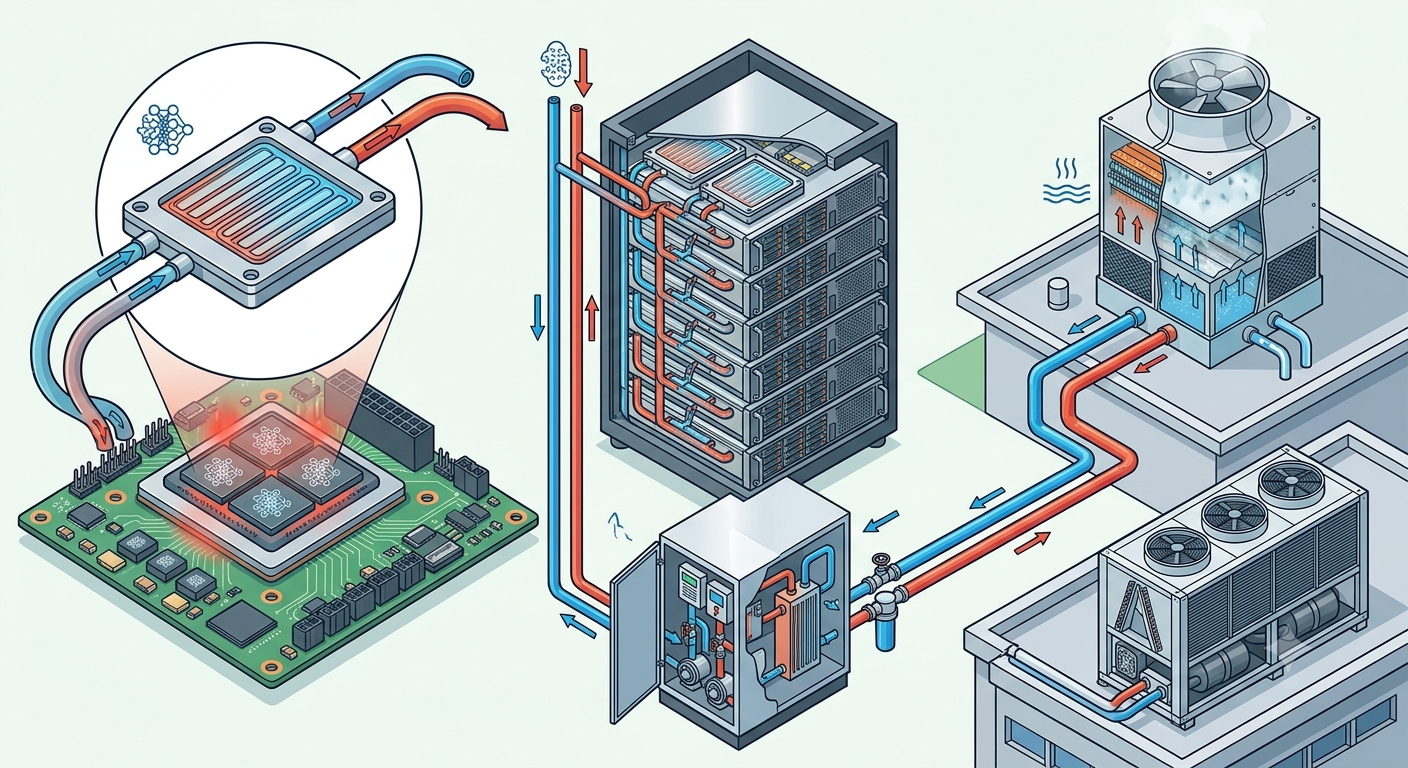
What Is Liquid Cooling?
Liquid Cooling is a cooling technology that uses a liquid coolant to absorb heat generated by electronic components and transfer it to a heat exchanger, where the heat is released into the surrounding environment. 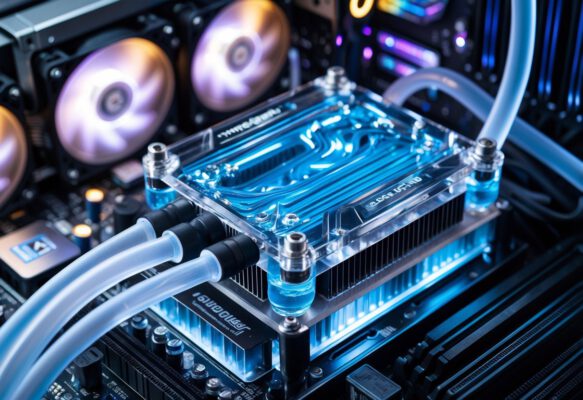
A typical Liquid Cooling system consists of the following components:
- Cold Plate
- Coolant
- Pump
- Heat Exchanger or Radiator
- Cooling Piping
- Coolant Distribution Unit (CDU)
Compared with air, liquid has a much higher thermal conductivity, allowing heat to be removed more efficiently. Therefore, Liquid Cooling maintains a stable operating temperature while delivering significantly better cooling performance than conventional air cooling.
Why Do AI Servers and Data Centers Need Liquid Cooling?
Modern AI servers process enormous amounts of data around the clock. As a result, CPUs and GPUs operate under heavy workloads and generate a significant amount of heat.
Without an effective cooling solution, excessive temperatures can lead to:
- GPU thermal throttling
- Reduced computing performance
- System instability
- Higher power consumption
- Shorter equipment lifespan
By contrast, Liquid Cooling removes heat much faster than Air Cooling, allowing servers to operate at optimal temperatures even under continuous heavy loads.
In addition, Liquid Cooling offers several important advantages:
- Superior heat transfer efficiency
- Lower energy consumption
- Reduced operating noise
- Support for high-power GPUs
- Higher server rack density
- Longer equipment lifespan
- Lower data center operating costs
For these reasons, Liquid Cooling is rapidly becoming the preferred cooling solution for next-generation AI infrastructure.
Why Is Leak Testing Essential?
A Liquid Cooling system can only perform efficiently when it is completely leak-tight.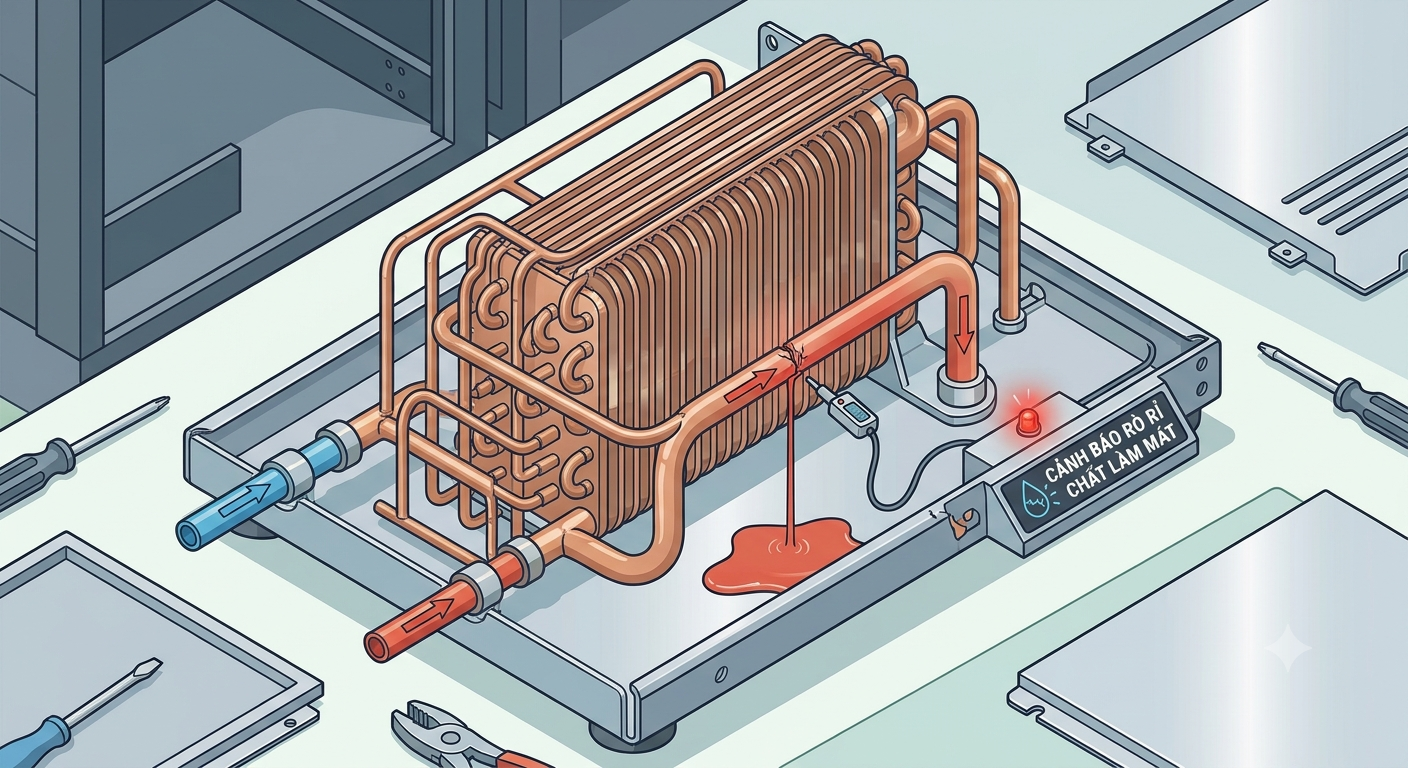
If coolant leaks occur, cooling performance will decrease significantly. Moreover, leaked coolant can damage sensitive electronic components, resulting in costly repairs, unexpected downtime, and reduced production efficiency.
Therefore, Leak Testing is a critical quality control process before any Liquid Cooling product is shipped.
Typical inspection points include:
- Cold Plate
- Heat Exchanger
- Cooling Piping
- Fittings
- Valves
- Seals and O-Rings
In other words, the objective of Leak Testing is to detect even the smallest leaks before products reach customers, ensuring maximum product quality and reliability.
Common Leak Testing Methods
Different leak testing methods are available depending on the product design and required detection sensitivity.
1. Pressure Decay Test
A Pressure Decay Test measures pressure changes over a specified period to determine whether a leak exists.
Because this method is fast, cost-effective, and easy to automate, it is widely used across many manufacturing industries.
2. Air Leak Test
An Air Leak Test uses compressed air to verify the sealing performance of a product.
Additionally, it provides fast inspection cycles and is well suited for high-volume automated production lines.
3. Helium Leak Test
A Helium Leak Test offers the highest level of leak detection sensitivity.
For example, it can identify extremely small leaks that cannot be detected using conventional testing methods. Therefore, it is widely used in industries requiring ultra-high reliability, including:
- Semiconductor manufacturing
- AI Servers
- Data Centers
- Electric Vehicles (EVs)
- Battery Cooling Systems
ULVAC Solutions for Liquid Cooling Manufacturing and Leak Testing
ULVAC provides comprehensive solutions for manufacturing and quality inspection of Liquid Cooling systems.
Auto Leak Test Machine
Automatically inspects the leak tightness of Cold Plates and Heat Exchangers, improving inspection efficiency, consistency, and productivity.
Helium Leak Detector
Detects ultra-fine leaks with exceptional accuracy, ensuring maximum product reliability.
Vacuum Pump
Provides a stable vacuum environment for manufacturing processes and leak testing applications.
Vacuum Brazing Furnace
Produces high-quality vacuum brazed joints while minimizing the risk of leakage after manufacturing.
With ULVAC’s solutions, manufacturers can:
- Improve product quality
- Reduce defect rates
- Increase production efficiency
- Lower operating costs
- Meet international quality standards
Conclusion
As AI and data center technologies continue to evolve, the demand for Liquid Cooling will continue to grow. Not only does Liquid Cooling improve cooling performance, but it also reduces energy consumption and extends equipment lifespan, making it the preferred cooling solution for future high-performance computing systems.
Nevertheless, even the most advanced Liquid Cooling system cannot deliver optimal performance without excellent leak tightness. Therefore, Leak Testing has become an essential quality assurance process throughout Liquid Cooling manufacturing.
Furthermore, ULVAC offers a complete portfolio of solutions—including Auto Leak Test Machine, Helium Leak Detector, Vacuum Pump, and Vacuum Brazing Furnace—to help manufacturers improve product quality, increase production efficiency, and meet the demanding requirements of the AI server and data center industries.
Contact ULVAC today for a free consultation and discover the ideal Liquid Cooling solution for your manufacturing process.