In vacuum heat treatment technology, heating a material to the required temperature is only the first step. The final quality of the product largely depends on the cooling stage. Instead of using quenching oil as in conventional systems, modern vacuum furnaces utilize Cooling Gas (high-pressure cooling gas) to reduce the temperature of the workpiece quickly, uniformly, and cleanly.
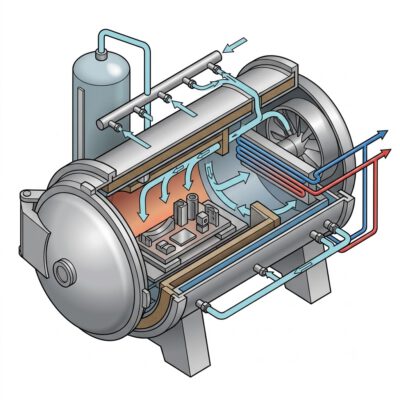
This technology is commonly known as Gas Quenching and is widely applied in:
- Tool steels
- Die steels
- Automotive components
- Aerospace components
- Precision electronic parts
- Semiconductor manufacturing
How Does Cooling Gas Work?
After the heating cycle is completed in a vacuum environment, the furnace chamber is filled with high-pressure cooling gas.
A high-speed circulation fan continuously forces the gas across the surface of the workpieces. Heat is transferred from the components to the gas stream and carried away from the heating zone.
This process continues until the products reach the desired temperature.
Compared to oil quenching, Cooling Gas provides:
- More uniform cooling
- Less distortion
- No surface contamination
- No waste oil generation
Common Types of Cooling Gas
1. Nitrogen (N₂)

Nitrogen is the most widely used gas in vacuum heat treatment furnaces.
Advantages:
- Low operating cost
- Easy availability
- Suitable for most tool steels and die steels
2. Argon (Ar)
Argon is commonly used for materials that are sensitive to chemical reactions.
Advantages:
- Completely inert gas
- No reaction with materials at high temperatures
3. Helium (He)
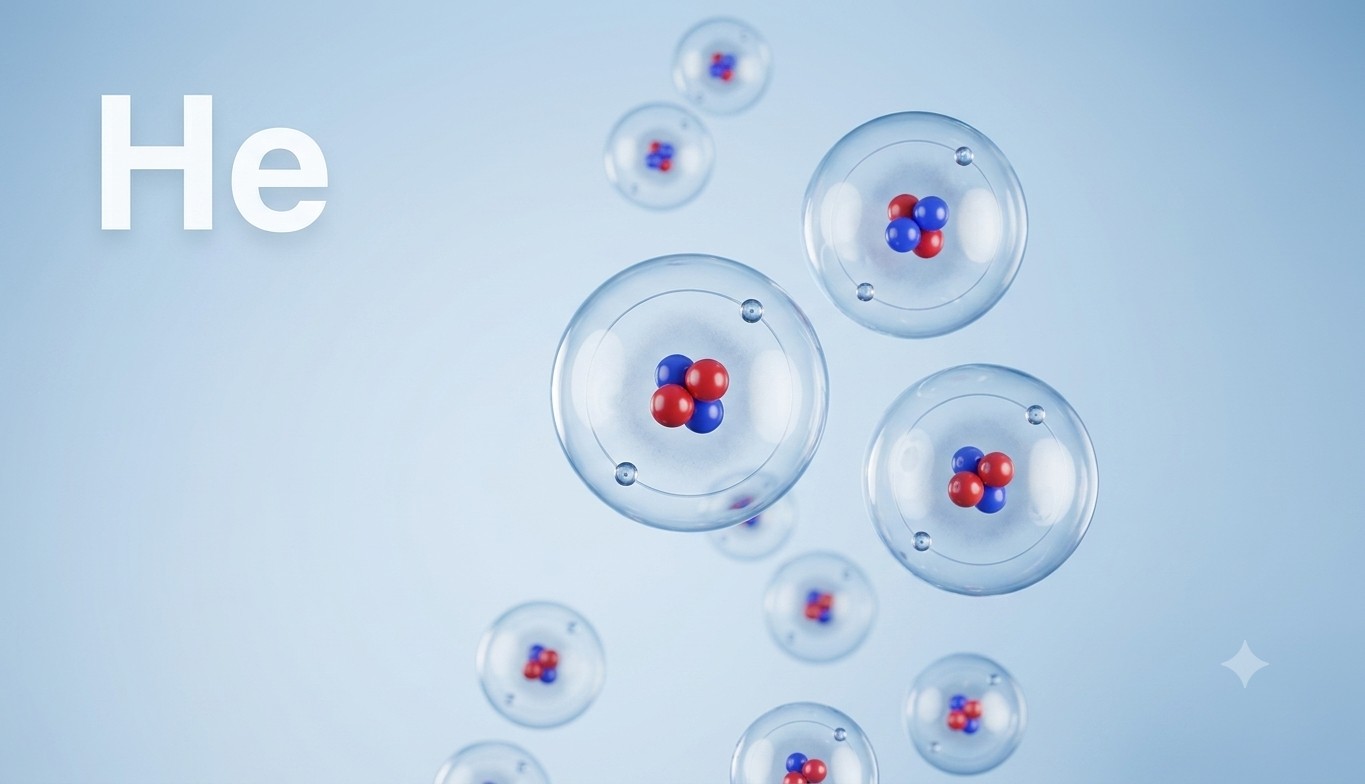
Helium offers exceptional heat transfer performance.
Advantages:
- Very high cooling rates
- Reduced product distortion
- Suitable for applications requiring stringent quenching conditions
However, the operating cost of Helium is significantly higher than that of Nitrogen or Argon.
Factors Affecting Cooling Gas Performance
Many people assume that increasing gas pressure alone can improve cooling performance. In reality, the effectiveness of Cooling Gas depends on several factors.
1. Gas Pressure
Higher pressure increases gas density and enhances heat transfer efficiency.
Modern systems typically operate at:
- 6 bar
- 10 bar
- 15 bar
- 20 bar
depending on process requirements.
2. Type of Gas
Each gas has a different thermal conductivity.
Cooling performance is generally ranked as:
Helium > Nitrogen > Argon
3. Circulation System Design
The cooling fan, gas flow direction, and chamber design directly affect temperature uniformity throughout the load.
This is why leading vacuum furnace manufacturers invest heavily in optimizing internal gas flow dynamics.
4. Workpiece Size and Geometry
Larger or more complex components are more challenging to cool uniformly.
Therefore, gas pressure and cooling cycles must be carefully selected according to the load characteristics.
Cooling Gas and Product Quality
Cooling Gas performance directly impacts:
1. Hardness After Quenching
If the cooling rate is insufficient, the material may fail to achieve the desired martensitic structure.
2. Mechanical Property Uniformity
Uniform cooling minimizes variations in mechanical properties across different areas of the same component.
3. Distortion Control
This is one of the greatest advantages of Gas Quenching compared to traditional oil quenching.
More uniform heat transfer helps control thermal stresses, reducing warpage and cracking.
4. Surface Cleanliness
Without the use of quenching oil, products remain exceptionally clean, which is particularly important for semiconductor, medical, and aerospace applications.
What Role Does Cooling Water Play in a Cooling Gas System?
Although Cooling Gas directly removes heat from the product, the gas itself cannot dissipate heat on its own.
After absorbing heat from the workpiece, the gas passes through a heat exchanger where it is cooled before being recirculated back into the furnace chamber.
At this stage, the Cooling Water system removes the heat carried by the Cooling Gas.
In other words:
Cooling Gas is the primary heat transfer medium, while Cooling Water supports the system by maintaining the cooling gas at an effective operating temperature. 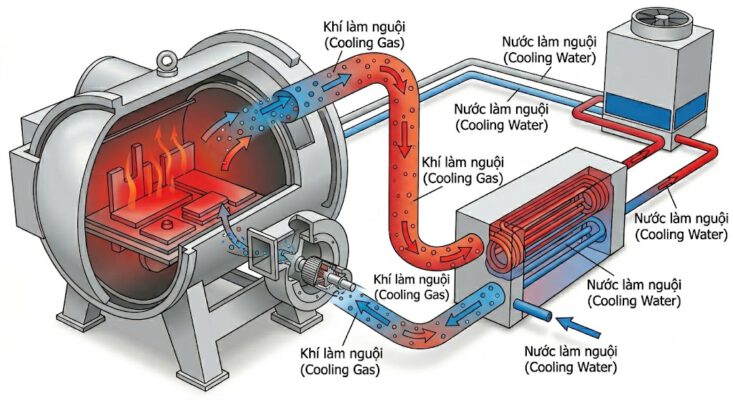
Therefore, Gas Quenching performance depends on the proper coordination of:
- Cooling gas type
- Gas pressure
- Gas circulation system
- Heat exchanger
- Cooling water system
Frequently Asked Questions (FAQ)
1. What is Cooling Gas?
Cooling Gas is a high-pressure gas used in vacuum heat treatment furnaces to cool products after the heating process.
2. Which gases are commonly used for Cooling Gas?
The most common gases are Nitrogen (N₂), Argon (Ar), and Helium (He). Nitrogen is the most widely used due to its cost-effectiveness.
3. Why is Cooling Gas preferred over oil quenching?
Cooling Gas reduces distortion, maintains cleaner surfaces, minimizes environmental impact, and is ideal for high-precision applications.
4. Does Cooling Gas pressure affect cooling performance?
Yes. Higher gas pressure improves heat transfer, resulting in faster cooling rates and better heat treatment performance.
5. What is the relationship between Cooling Gas and Cooling Water?
Cooling Gas removes heat from the product, while Cooling Water cools the gas through a heat exchanger to maintain stable cooling performance.
6. How does Cooling Gas affect product quality?
Cooling Gas directly influences hardness, mechanical property uniformity, and dimensional stability after heat treatment.
Conclusion
Cooling Gas plays a critical role in controlling cooling rates, hardness, and distortion in vacuum heat treatment processes. Selecting the right gas type, operating pressure, and circulation system can significantly improve product quality and production efficiency.
If you are looking for a vacuum heat treatment solution equipped with advanced Gas Quenching technology, the engineering team at ULVAC Vietnam is ready to provide expert consultation tailored to your materials and manufacturing requirements.