In many manufacturing facilities, Vacuum Pumps operate almost continuously to create and maintain vacuum environments for critical processes such as heat treatment, semiconductor manufacturing, PVD/CVD coating, lithium battery production, food packaging, and pharmaceutical manufacturing. However, many companies are forced to replace or overhaul their pumps after only 3–5 years due to improper operation and insufficient maintenance.
In reality, with the right pump selection, proper operating conditions, and regular preventive maintenance, a Vacuum Pump can operate reliably for more than 10 years. This not only reduces maintenance and replacement costs but also minimizes unexpected downtime and improves overall production efficiency.
In this article, we’ll explore 10 proven ways to maximize the service life of your Vacuum Pump.
1. Choose the Right Vacuum Pump for Your Application
Selecting the appropriate Vacuum Pump is the most critical factor, yet it is often overlooked.
Different industries require different vacuum characteristics, including:
- Required vacuum level
- Pumping speed
- Type of process gas
- Water vapor content
- Dust and particles
- Corrosive gases
Recommended Vacuum Pump by Application
| Application | Recommended Vacuum Pump |
|---|---|
| Semiconductor | Dry Vacuum Pump |
| Vacuum Heat Treatment | Mechanical Booster + Rotary Pump |
| Vacuum Coating | Dry Vacuum Pump or Oil Sealed Vacuum Pump |
| Food Packaging | Oil Sealed Vacuum Pump |
| Laboratory | Scroll Pump or Rotary Pump |
Using the wrong type of pump can lead to continuous overloading, lower pumping efficiency, and premature wear of internal components. 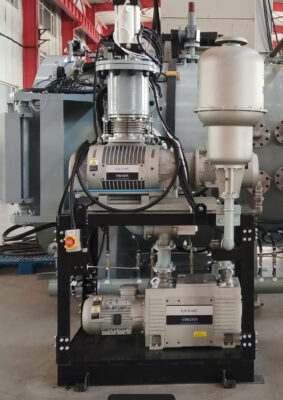
ULVAC Mechanical Booster + Rotary Pump installed in a vacuum heat treatment furnace system
2. Avoid Running the Vacuum Pump Under Continuous Overload
The following signs may indicate that your pump is operating under excessive load:
- Motor running near maximum capacity
- Excessively high pump temperature
- Unusual operating noise
- Abnormally high motor current
- Longer Pump Down time
Continuous overload accelerates wear on critical components such as bearings, rotors, and motors.
Regularly monitoring operating parameters helps detect abnormalities before serious damage occurs.
3. Perform Preventive Maintenance Regularly
Routine maintenance is essential for maintaining system performance and preventing costly failures.
Maintenance should include inspection of:
- Vacuum Pump
- Filter
- Vacuum piping
- Solenoid valve
- Pressure and vacuum gauges
- Cooling system
- Drive belt (if applicable)
Regular inspections can significantly reduce the risk of unexpected equipment failure and production downtime. 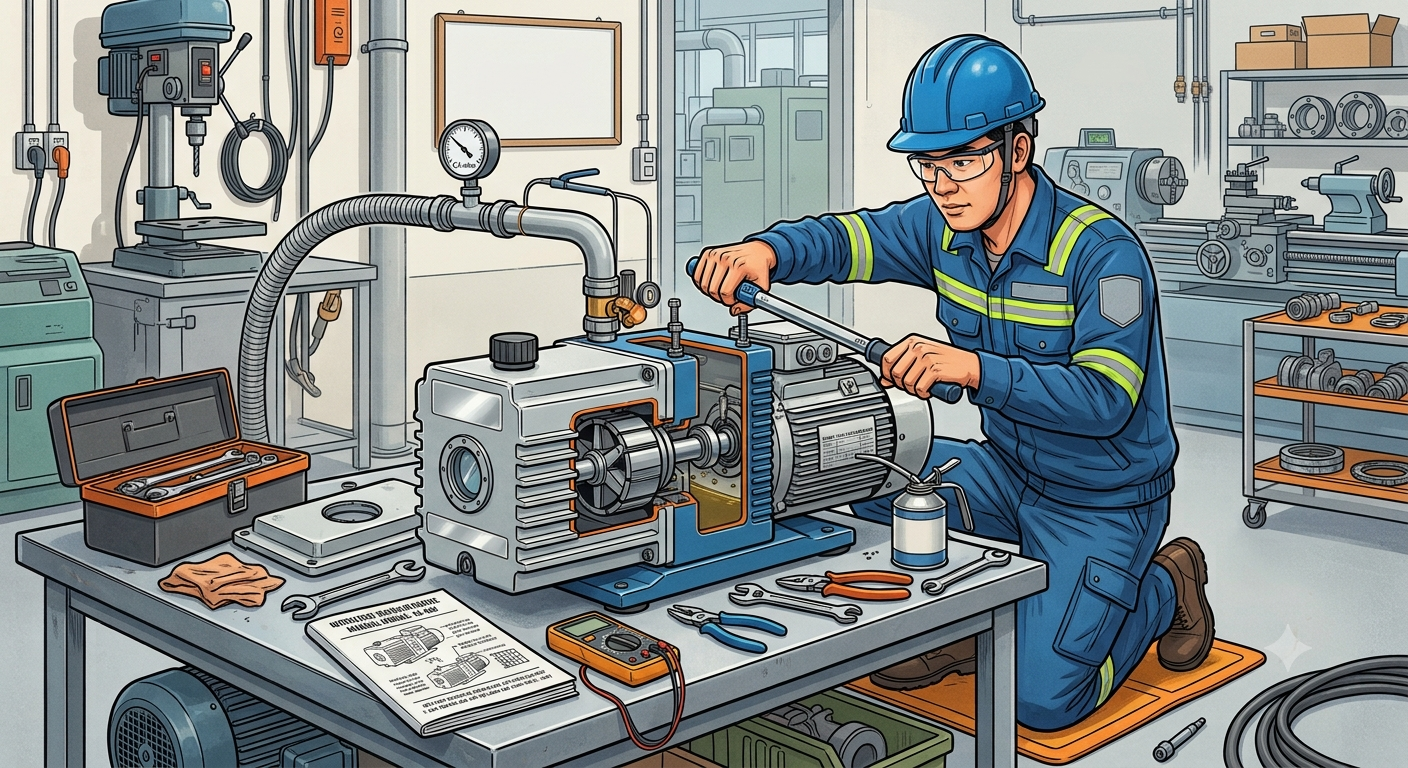
4. Replace Oil on Schedule (For Oil Rotary Vacuum Pumps)
For Oil Sealed Vacuum Pumps, oil performs three critical functions:
- Lubrication
- Sealing
- Cooling
When the oil becomes:
- Contaminated
- Oxidized
- Mixed with water
- Filled with dust or particles
vacuum performance decreases, while wear on internal components increases dramatically.
Best Practices
- Check the oil condition regularly.
- Replace oil according to the manufacturer’s recommendations.
- Use only genuine vacuum pump oil designed for your equipment.
5. Keep the Cooling System Operating Efficiently
Excessive heat is one of the leading causes of reduced Vacuum Pump lifespan.
To maintain proper cooling:
- Clean cooling fans regularly.
- Inspect the heat exchanger or cooler.
- Ensure stable cooling water flow (if applicable).
- Remove dust from cooling fins.
An efficient cooling system allows the pump to operate reliably for many years.
6. Replace Filters at the Right Time
A clogged filter can cause:
- Reduced pumping capacity
- Increased motor load
- Higher operating temperature
- Greater power consumption
Inspect filters regularly and replace them according to the manufacturer’s maintenance schedule or whenever performance begins to decline.
7. Check for Vacuum Leaks
Even a small vacuum leak can result in:
- Longer Pump Down time
- Continuous pump operation
- Increased energy consumption
- Shorter equipment lifespan
For high-vacuum applications such as semiconductors, lithium batteries, and medical equipment, Helium Leak Detectors provide the most accurate method for leak testing.
8. Train Equipment Operators Properly
Many equipment failures are caused by improper operating procedures, including:
- Incorrect startup sequence
- Sudden shutdown
- Ignoring alarm notifications
- Skipping scheduled maintenance
Well-trained operators can significantly reduce human error and extend equipment life.
9. Use Genuine Replacement Parts
Components such as:
- Seals
- O-rings
- Bearings
- Filters
- Valves
directly affect the performance and reliability of a Vacuum Pump.
Using non-genuine parts may reduce sealing performance, efficiency, and equipment durability.
For maximum reliability, always use genuine replacement parts recommended by the manufacturer.
10. Monitor Equipment Performance Using Operating Data
Tracking operating data helps identify abnormal conditions before major failures occur.
Key parameters to monitor include:
- Vacuum pressure
- Pumping speed
- Motor current
- Operating temperature
- Pump Down time
- Equipment vibration
Today, many manufacturers implement Condition Monitoring systems to optimize maintenance planning, reduce operating costs, and improve equipment reliability.
Conclusion
The lifespan of a Vacuum Pump depends not only on the quality of the equipment itself but also on proper selection, operation, and maintenance throughout its service life.
By choosing the correct pump, performing regular oil and filter replacement, checking for vacuum leaks, monitoring operating conditions, and using genuine replacement parts, manufacturers can extend the service life of their Vacuum Pumps to more than 10 years while reducing maintenance costs and minimizing unplanned downtime.
ULVAC Vietnam provides comprehensive vacuum solutions, including equipment selection, installation, preventive maintenance, repair services, and genuine spare parts.
With experienced engineers and a global support network, we help manufacturers maintain reliable vacuum system performance, reduce operating costs, and maximize equipment lifespan.
Contact ULVAC Vietnam today to find the ideal vacuum solution for your manufacturing process.