1. What Is a Vacuum Aluminum Brazing Furnace? Applications
A Vacuum Aluminum Brazing Furnace is industrial heating equipment used to join aluminum or aluminum alloy components in a vacuum environment. The process uses a filler metal with a lower melting point than the base metal, creating strong joints without melting the entire component.
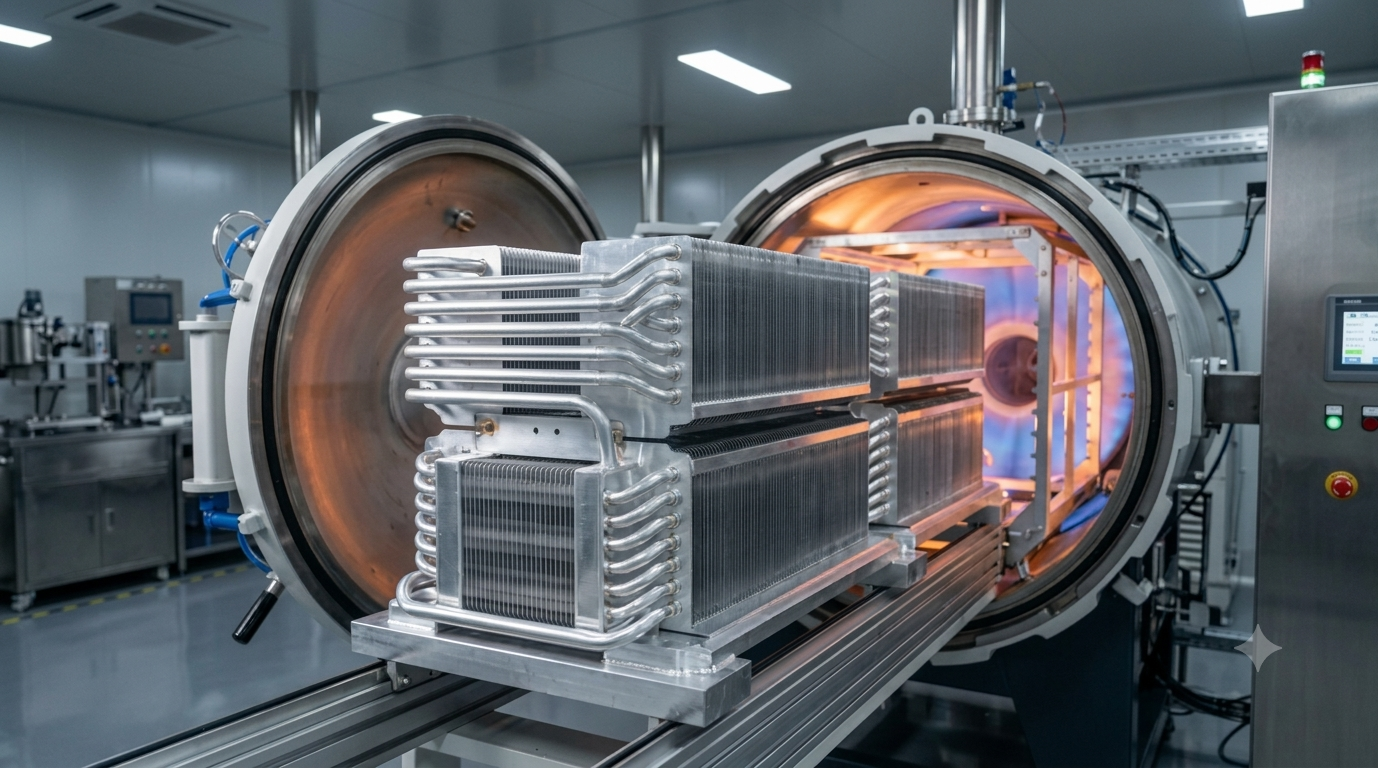
One of the key advantages of vacuum aluminum brazing is that it does not require flux. As a result, manufacturers can reduce post-brazing cleaning operations and improve product cleanliness.
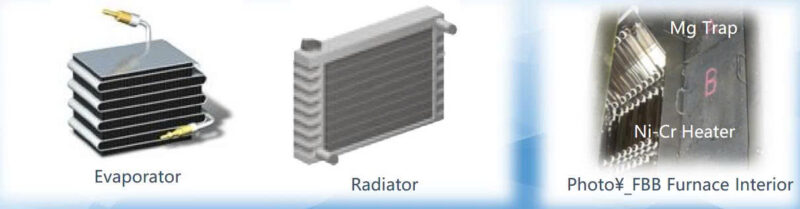
Vacuum aluminum brazing furnaces are widely used to manufacture heat exchangers, including automotive air-conditioning condensers and evaporators, radiators, and oil coolers. The technology is also used for liquid cooling plates and complex aluminum components.
For large-scale manufacturers, selecting the right furnace helps meet quality requirements, improve productivity, and maintain stable production operations.
2. Six Key Factors to Consider When Investing in a Vacuum Aluminum Brazing Furnace
2.1. Production Capacity and Manufacturing Requirements
Production capacity is one of the most important factors when selecting a vacuum aluminum brazing furnace. The equipment must meet current production demands while supporting future expansion plans.
Before investing, manufacturers should determine the following:
- Target production volume per day, month, and year.
- Product dimensions and weight.
- Number of components processed per batch.
- Heating, brazing, and cooling cycle times.
- Loading and unloading times.
- Daily operating hours.
In addition, manufacturers should consider potential increases in future orders. This helps prevent the furnace from becoming a production bottleneck as demand grows.
For example: A furnace with a large loading capacity does not necessarily deliver higher output. Cycle time and loading and unloading operations can also affect productivity. Therefore, manufacturers should compare the number of conforming finished products produced within the same period.
2.2. Brazing Quality and Temperature Uniformity
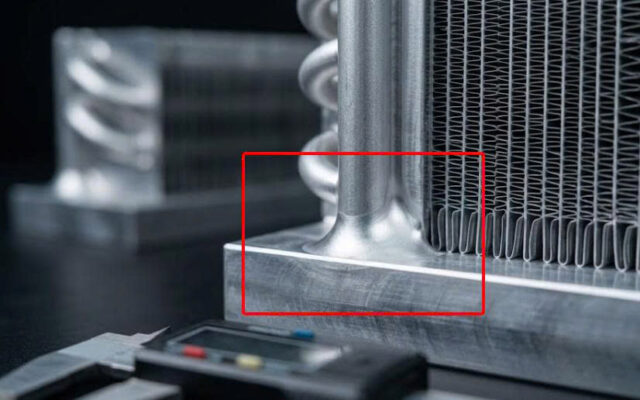
Brazing quality directly affects product acceptance rates. It also influences rework costs and losses caused by defective products.
During vacuum aluminum brazing, the temperature must remain within the appropriate process range. The filler metal must melt and fill the joint gaps, while the base metal remains solid.
If the temperature distribution is uneven, brazing quality may suffer. Some areas may have incomplete joints, while others may experience overheating or deformation.
Therefore, manufacturers should evaluate the following criteria:
- Temperature uniformity throughout the working zone.
- Temperature control according to the programmed heating profile.
- Temperature data recording and storage capabilities.
- Repeatability between production cycles.
- Ability to meet leak-testing requirements.
For products with multiple fluid channels, practical testing is particularly important. Manufacturers should evaluate sample components before making an investment decision. This helps confirm whether the furnace can meet the required technical specifications.
2.3. Initial Investment and Total Cost of Ownership
The initial purchase price does not represent the full cost of operating industrial equipment. Therefore, manufacturers should evaluate the Total Cost of Ownership (TCO).
Key cost factors include:
- Equipment and accessory costs.
- Transportation, installation, and commissioning costs.
- Electricity and cooling water consumption.
- Maintenance and replacement parts.
- Operating labor.
- Production downtime caused by equipment failures.
- Inspection and defective product handling costs.
Furthermore, vacuum aluminum brazing does not require flux. This can reduce the need for post-brazing cleaning in suitable production processes.
However, actual savings depend on the existing manufacturing process. Product design and operating conditions also influence the results.
Recommendation: Manufacturers should compare costs per conforming product rather than simply comparing equipment purchase prices. Maintenance expenses over the equipment’s service life should also be included.
2.4. Batch Furnace vs. Continuous Vacuum Aluminum Brazing Furnace
Depending on production requirements, manufacturers can choose between a batch furnace and a continuous furnace. Each option has its own characteristics.
| Criteria | Batch Brazing Furnace | Continuous Brazing Furnace |
|---|---|---|
| Production process | Processes components in separate batches | Moves workpieces through successive processing stages |
| Product mix | May suit flexible production schedules | Well suited to stable, high-volume production |
| Productivity | Depends on batch capacity and cycle time | Depends on conveyor speed and processing time |
| Automation | Depends on equipment configuration | Can incorporate automated workpiece transfer |
| Floor space | Depends on furnace dimensions | Requires space for the integrated production line |
For manufacturers with high production volumes, a continuous furnace is worth considering. It supports a more streamlined production flow. However, manufacturers must still evaluate processing times and balance the capacity of each production stage.
In contrast, a batch furnace may be more suitable for factories that frequently change product types or production schedules. The final decision should therefore reflect production volume, flexibility requirements, and operating costs.
2.5. Vacuum System and Maintenance Requirements
The vacuum system creates the environment required for the brazing process. Therefore, manufacturers should carefully evaluate the pump configuration and the system’s ability to maintain the required vacuum pressure.
When selecting equipment, consider the following:
- Operating vacuum pressure.
- Time required to reach the target pressure.
- Vacuum pump system configuration.
- Measures to control magnesium vapor accumulation.
- Accessibility of components for maintenance.
- Availability of replacement parts.
- Technical support and troubleshooting services.
In addition, vacuum aluminum brazing can generate magnesium vapor, which may accumulate in certain areas of the system. A magnesium trap (Mg Trap) helps limit contamination and protect the vacuum system.
Beyond selecting suitable equipment, manufacturers should establish a preventive maintenance schedule. A clear troubleshooting plan can also help reduce the risk of production interruptions.
2.6. Production Line Integration and Future Expansion
A vacuum aluminum brazing furnace must be compatible with the entire production line. Manufacturers should evaluate more than the brazing chamber alone.
Before investing, consider the following:
- Integration with component preparation processes.
- Workpiece loading, transfer, and unloading methods.
- Temperature data recording and storage.
- Connectivity with production management systems.
- Electrical, cooling water, and floor space requirements.
- Expansion options for increasing production volume.
Manufacturers should also consider future automation requirements. Defining these needs early can help avoid costly modifications later.
3. ULVAC FVC-430/FVC-420 Continuous Vacuum Aluminum Brazing Furnaces
The ULVAC FVC-430/FVC-420 series features a continuous vacuum aluminum brazing furnace design with multiple chambers.
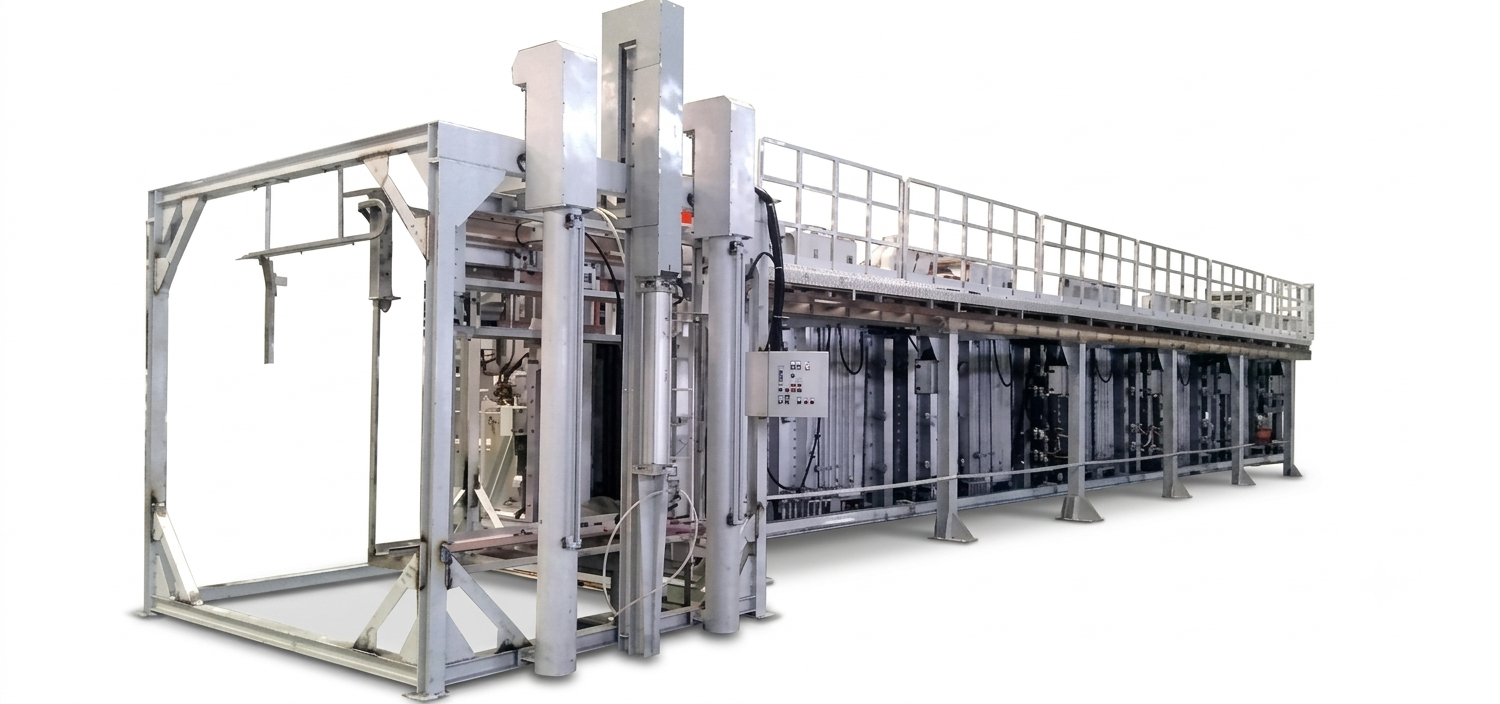
Key features of this series include:
- Circulating workpiece transport: Supports workpiece movement through successive processing stages.
- Multi-zone heating: Helps control temperature distribution within the processing zone.
- Magnesium trap (Mg Trap): Helps limit magnesium accumulation in the system.
- Diffusion pump: Provides the vacuum environment required for brazing.
- Maximum brazing chamber temperature: 700°C.
- Operating vacuum pressure: Below 4.0 × 10⁻³ Pa.
- Temperature uniformity: ±3°C.
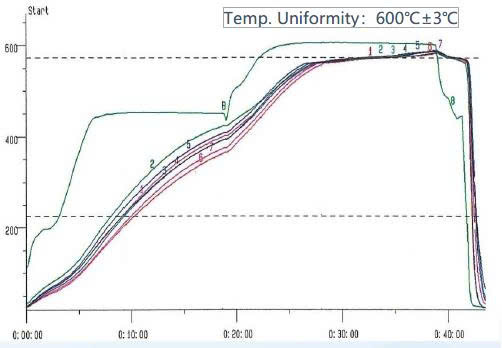
The appropriate model and configuration should be selected based on the manufacturer’s production volume, workpiece dimensions, process requirements, and factory conditions.
4. How to Evaluate the Return on Investment in a Vacuum Aluminum Brazing Furnace
To make an informed investment decision, manufacturers should develop an evaluation plan based on actual production data.
Step 1: Assess Current Production Conditions
First, collect data on production volume and cycle times. Manufacturers should also record defect rates, energy costs, and equipment downtime.
Step 2: Define Investment Objectives
Next, establish clear and measurable investment objectives. For example, a factory may aim to increase production capacity or reduce post-brazing cleaning operations. Another objective may be to improve brazing consistency.
These objectives should be measured using specific performance indicators. This makes it easier to evaluate the results after the equipment enters operation.
Step 3: Test Actual Production Components
Manufacturers should discuss sample testing with the equipment supplier. Both parties should agree on the evaluation criteria before testing begins.
These criteria may include brazing quality, leak-tightness, and temperature uniformity. The results provide a practical basis for determining whether the equipment meets the required specifications.
Step 4: Compare Total Costs and Benefits
Finally, compare the investment cost with the expected benefits. The evaluation should include operating and maintenance expenses, as well as measurable production improvements.
A simple payback period can be estimated using the following formula:
Simple Payback Period = Total Initial Investment / Annual Net Incremental Benefits
Net benefits represent cost savings and additional value generated, minus the associated additional expenses. This formula provides a preliminary estimate. For major investments, manufacturers should also evaluate cash flows and costs over the equipment’s entire service life.
5. Conclusion
Investing in a vacuum aluminum brazing furnace requires careful evaluation of several factors. Production capacity, brazing quality, and total cost of ownership are particularly important. Manufacturers should also consider maintenance requirements and future production line expansion.
For factories manufacturing heat exchangers, automotive components, and air-conditioning equipment, selecting the right brazing technology can help improve production consistency and process reliability.
The ULVAC FVC-430/FVC-420 series is one option manufacturers can consider when evaluating continuous vacuum aluminum brazing furnaces. However, the appropriate model and configuration depend on each factory’s actual production requirements.
ULVAC Vietnam provides information and consultation on vacuum technology equipment for industrial manufacturing applications.
Contact ULVAC Vietnam to discuss your production requirements and explore vacuum aluminum brazing furnace solutions for your factory.