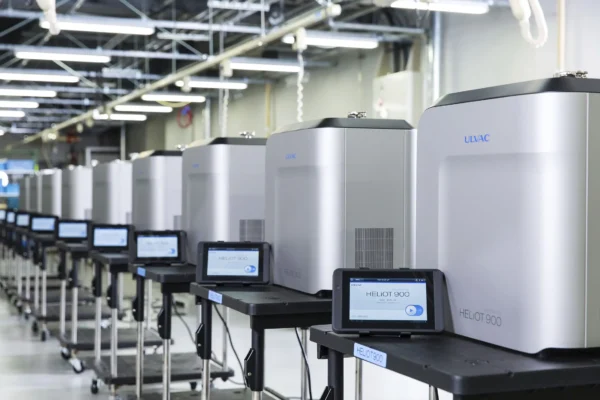
In high-tech industries such as semiconductor manufacturing, EV battery production, aerospace, and medical devices, vacuum leak detection systems play a critical role in ensuring product quality and process stability. In this field, the Heliot 700/900 series from ULVAC has long been recognized as an industry benchmark for sensitivity, reliability, and durability. In Vietnam, many factories continue to place strong trust in ULVAC’s Helium Leak Detector systems.
 |
 |
 |
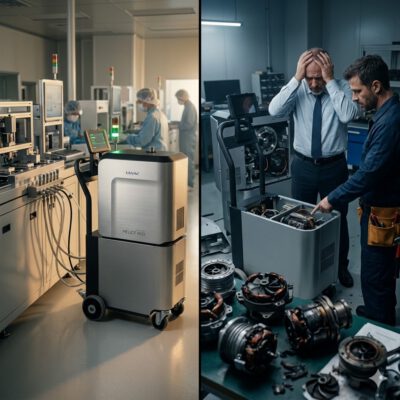
However, the overall performance of the system depends heavily on the condition of the Turbo Molecular Pump (TMP), which is considered the “heart” of the Helium Leak Detector. Therefore, even a minor maintenance mistake can lead to severe damage and costly production downtime.
1. Why Is the Turbo Molecular Pump Extremely Vulnerable?
To understand the risks, it is important to examine the ultra-high-speed operating principle of the TMP. Unlike conventional vacuum pumps, a turbo molecular pump works based on momentum transfer.
Extremely High Rotational Speed
The Rotor consists of multiple stages of angled blades rotating at speeds ranging from 40,000 to over 90,000 rpm.
Micrometer-Level Clearance
At the same time, the clearance between the Rotor and Stator is designed to be extremely small in order to maximize pumping efficiency.
As a result, even the slightest mechanical deviation can cause destructive contact between rotating and stationary components. In addition, the pump must continuously withstand back pressure and significant thermal loads during operation. Consequently, components such as bearings and oil wicks tend to degrade over time.
2. Lubrication System: The Critical Weak Point Often Overlooked
According to ULVAC technical documentation, the bearing and lubrication system is the most critical section requiring strict maintenance control.
Oil Wick
Unlike oil-flooded pumps, turbo pumps use an oil wick lubrication system. After approximately 8,000 operating hours, the wick fibers may harden or become contaminated. As a result, the bearings can become oil-starved, leading to localized overheating and eventual shaft seizure.
Ball Bearings
Ball bearings experience the highest mechanical stress inside the pump. After approximately 16,000 operating hours, the internal bearing clearance often exceeds the safe operating limit. Although the pump may still appear to operate normally, the risk of shaft failure increases significantly.
3. Catastrophic Failure Mechanism
Why does overdue maintenance often lead to irreversible damage? In practice, catastrophic failure typically occurs through the following chain reaction:
Dynamic Imbalance
Even a small amount of burnt oil residue or particle contamination on the Rotor blades can shift the center of mass.
Massive Centrifugal Force
At rotational speeds of tens of thousands of rpm, centrifugal force amplifies this imbalance dramatically. Consequently, the Rotor shaft begins to vibrate excessively.
Chain-Reaction Collision
Once bearing clearance exceeds the allowable limit, the Rotor blades may contact the Stator directly. This initiates a domino effect in which the ultra-thin blade stages are destroyed sequentially. Eventually, the pump interior becomes a mass of damaged metal fragments. 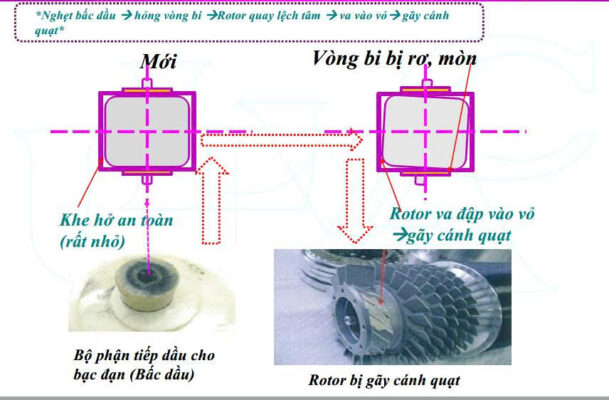
Expert Note
The replacement cost of a turbo molecular pump is typically 5–10 times higher than the cost of preventive maintenance. Furthermore, lead times for replacement parts may stop factory operations for several weeks, causing substantial financial losses.
4. Interdependency Within the Heliot 700/900 System
The turbo pump does not operate independently. Instead, it is closely integrated with other subsystems inside the Heliot platform. Therefore, failures in auxiliary components can also damage the TMP.
Backing Pump
If the backing pump performance deteriorates or its oil becomes contaminated, the turbo pump must work harder to maintain vacuum conditions. This increases motor load and may result in overheating.
Vent Valve
If atmospheric venting occurs too rapidly while the Rotor is spinning at high speed, sudden air resistance can generate enormous mechanical stress. In severe cases, the Rotor blades may fracture instantly.
5. Recommended Maintenance Schedule from ULVAC
To ensure stable operation, the following maintenance schedule should be strictly followed:
| Maintenance Item | Operating Interval | Recommended Frequency |
|---|---|---|
| Replace oil wick & vacuum oil | 8,000 hours | Once per year |
| Replace bearings & complete overhaul | 16,000 hours | Every 2 years |
| Inspect Ion Source & Pirani Gauge | 8,000 hours | Once per year |
| Replace rubber O-rings | 16,000 hours | Every 2 years |
6. Why Use Genuine ULVAC Service and Spare Parts?
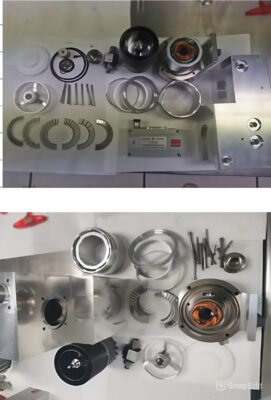
Using non-authorized maintenance services carries significant risks. In contrast, genuine ULVAC service provides higher reliability through the following advantages:
Genuine R-2 and SMR-100 Vacuum Oils
These oils help minimize backstreaming contamination. As a result, the Ion Source remains clean and measurement accuracy is maintained.
Japanese-Standard Components
Bearings and oil wicks are manufactured with extremely high precision tolerances. Therefore, general industrial components cannot provide equivalent performance or reliability.
Dynamic Balancing Inspection
After maintenance, the Rotor is dynamically balanced using specialized equipment. This ensures smoother operation, lower vibration, and longer service life.
FAQ – Frequently Asked Questions
1. How often should the turbo pump in a Heliot system be maintained?
Vacuum oil and oil wicks should typically be replaced every 8,000 operating hours. In addition, bearing replacement and complete overhaul are recommended every 16,000 hours.
2. The Heliot system is still operating normally. Is maintenance still necessary?
Yes. Internal wear such as excessive bearing clearance is often difficult to detect until major failure occurs.
3. What are the warning signs of turbo pump failure?
Common symptoms include:
- Abnormal vibration or noise
- Longer pump-down time
- Increased pump temperature
- Unstable vacuum pressure
4. Why should standard vacuum oil not be used?
Non-standard oil may contaminate the vacuum system and reduce helium leak detection accuracy.
5. Can standard industrial bearings be used?
No. Turbo molecular pumps operate at extremely high rotational speeds and require bearings with special precision grades.
6. Is rapid venting dangerous?
Yes. Sudden venting while the Rotor is spinning at high speed may bend or fracture the Rotor blades.
7. Why should genuine ULVAC service be used for Heliot systems?
Authorized service ensures the correct oil, genuine replacement parts, and proper dynamic balancing after maintenance. As a result, the pump operates more reliably and has a longer service life.
8. Is turbo pump maintenance at ULVAC Vietnam expensive?
Using ULVAC Vietnam offers several advantages compared with overseas service options:
- Lower cost: Eliminates airfare, accommodation, and overseas engineer expenses
- Faster response: Local engineers can provide immediate on-site support
- Higher safety: Reduces the risk of Rotor damage caused by improper assembly or non-standard maintenance procedures
In summary, turbo pump maintenance is far more than simple oil replacement. Instead, it is a comprehensive process for controlling both mechanical and chemical risks. Therefore, do not allow small maintenance mistakes to cause major production losses. Protect the “heart” of your Heliot system before failure occurs.