In industrial vacuum systems, many companies invest hundreds of millions—or even billions—of VND in vacuum pumps, yet overlook one critical factor: vacuum pump oil. This is a common but extremely costly mistake.
Using the wrong type of oil can lead to a wide range of serious issues, including:
- Unstable vacuum pressure
- Abnormally high pump temperature
- Increased oil backstreaming
- Carbon buildup inside the pump chamber
- Rapid vane wear
- Reduced lifespan of the entire vacuum system
Especially for oil-sealed vacuum pumps from ULVAC Vietnam, selecting the correct oil not only affects pumping performance but also determines the stability of the entire production line. 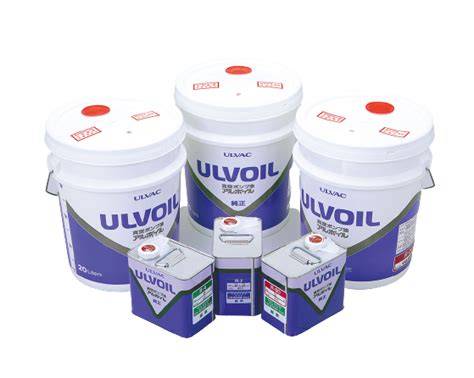
Why Is Vacuum Pump Oil So Important?
In oil rotary vacuum pumps, oil is not simply used for lubrication.
Vacuum oil also plays several critical roles:
- Sealing the gap between the rotor and vane
- Reducing friction and operating temperature
- Helping achieve stable ultimate pressure
- Minimizing internal component wear
- Carrying and trapping contaminants and moisture
If unsuitable oil is used, the pump’s sealing mechanism can be compromised, leading to vacuum instability and reduced pumping performance.
5 Common Mistakes When Choosing Vacuum Oil for Oil-Sealed Vacuum Pumps
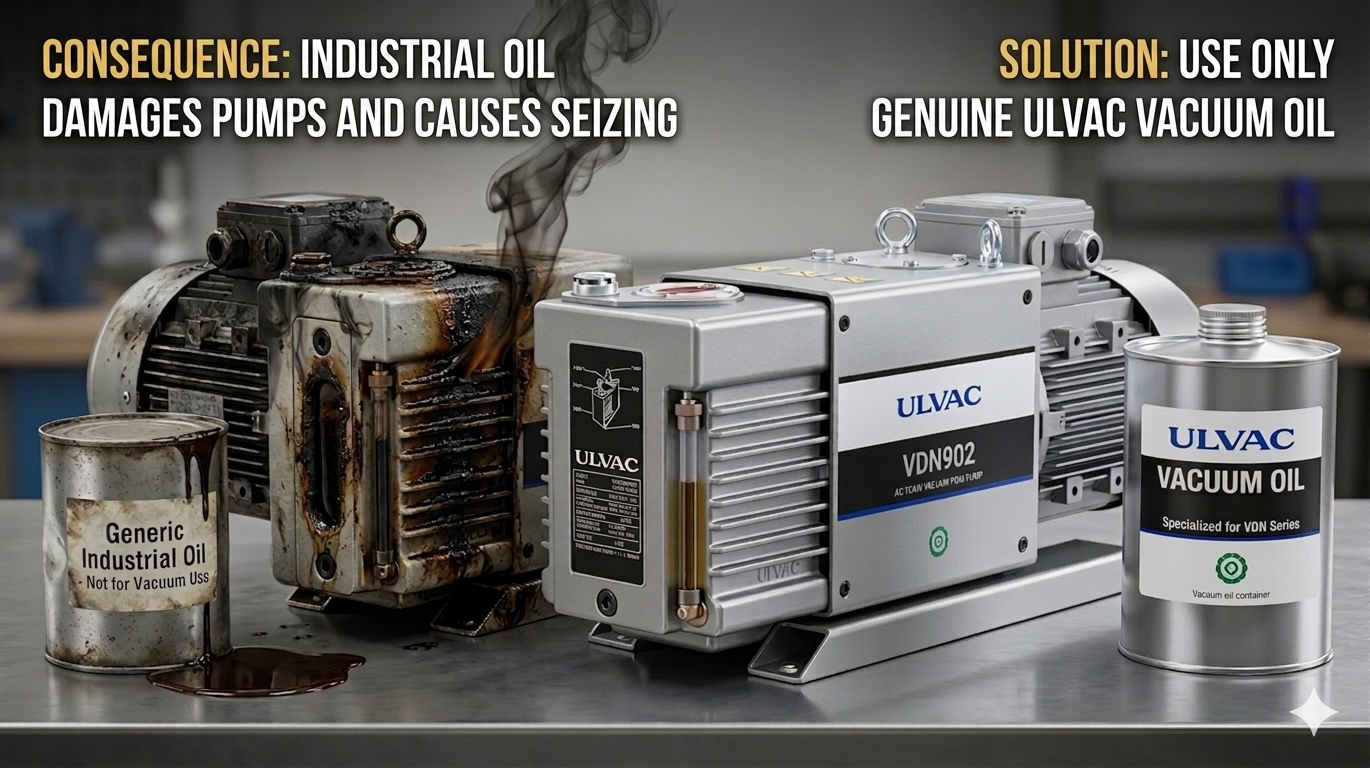
1. Using Standard Industrial Oil Instead of Vacuum Oil
This is one of the most common mistakes in factories.
Many users assume hydraulic oil or compressor oil can replace vacuum oil to save costs. However, vacuum pump oil requires:
- Low vapor pressure
- High oxidation resistance
- Excellent thermal stability
- Strong anti-carbonization performance
Standard industrial oils do not meet these requirements.
As a result:
- Vacuum pressure cannot reach the required level
- Oil degrades rapidly
- Oil mist and contamination increase

2. Choosing the Wrong Oil Viscosity
Oil viscosity directly affects the sealing performance inside the pump.
If the oil is too thin:
- Sealing performance decreases
- Ultimate pressure worsens
If the oil is too thick:
- Motor load increases
- Operating temperature rises
- Pump-down time becomes longer
Therefore, each oil-sealed vacuum pump model has its own recommended oil specifications depending on operating conditions.
3. Ignoring the Application Environment
No single vacuum oil is suitable for every application.
For example:
- Systems handling moisture require strong anti-emulsification performance
- Coating and semiconductor systems require low backstreaming oil
- Chemical applications require chemically stable oil
Using unsuitable oil in environments with high moisture or solvent vapor can quickly cause milky oil, sludge formation, or carbonization.
4. Mixing Different Vacuum Oils
This is a major reason many vacuum pumps become unstable after maintenance.
Different oils contain:
- Different additives
- Different chemical compatibility properties
When mixed together:
- Foaming may occur
- Sealing performance decreases
- Internal contamination increases
In many cases, mixing oils can significantly shorten vane and bearing life.
5. Changing Oil Only After Problems Occur
This “run-until-failure” mindset is extremely expensive.
Degraded vacuum oil often shows warning signs such as:
- Dark or milky discoloration
- Burnt smell
- Sludge or deposits
- Longer pump-down time
- Unstable vacuum pressure
If operation continues:
- Carbon deposits accumulate on the rotor and vane
- Internal leakage increases
- Overhaul costs become far higher than regular oil replacement costs
How to Choose the Right Vacuum Oil for Oil-Sealed Vacuum Pumps
To select the proper vacuum oil, several factors must be considered simultaneously.
Pump Model
Each ULVAC oil-sealed vacuum pump series has specific oil requirements regarding:
- Viscosity
- Vapor pressure
- Thermal stability
Application
Examples include:
- Semiconductor
- Vacuum furnace
- Coating
- Laboratory
- Vacuum packaging
- Degassing
Each application has different contamination levels and vapor loads. 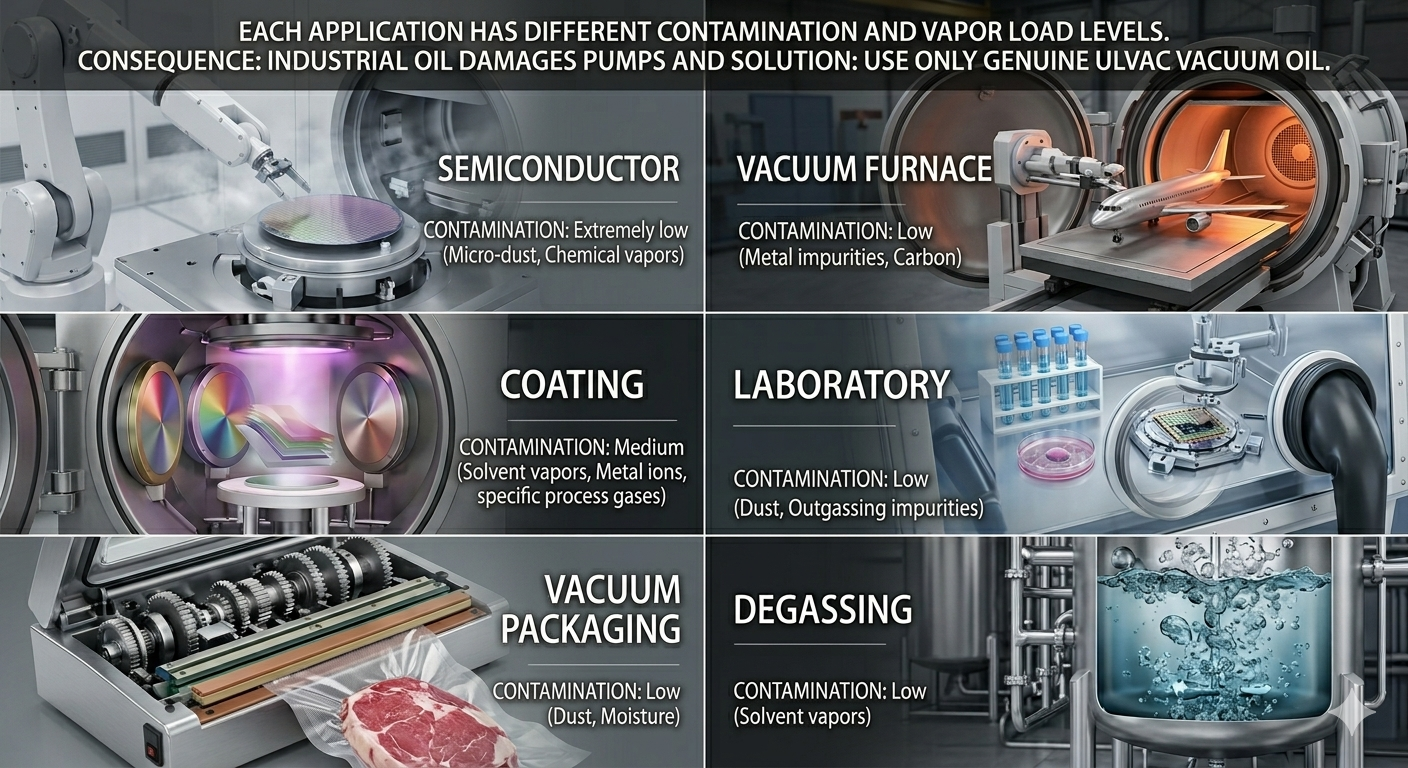
Operating Conditions
- Continuous operation time
- High-temperature environments
- Moisture or solvent vapor exposure
- Frequency of system venting
Signs That You Are Using the Wrong Vacuum Oil
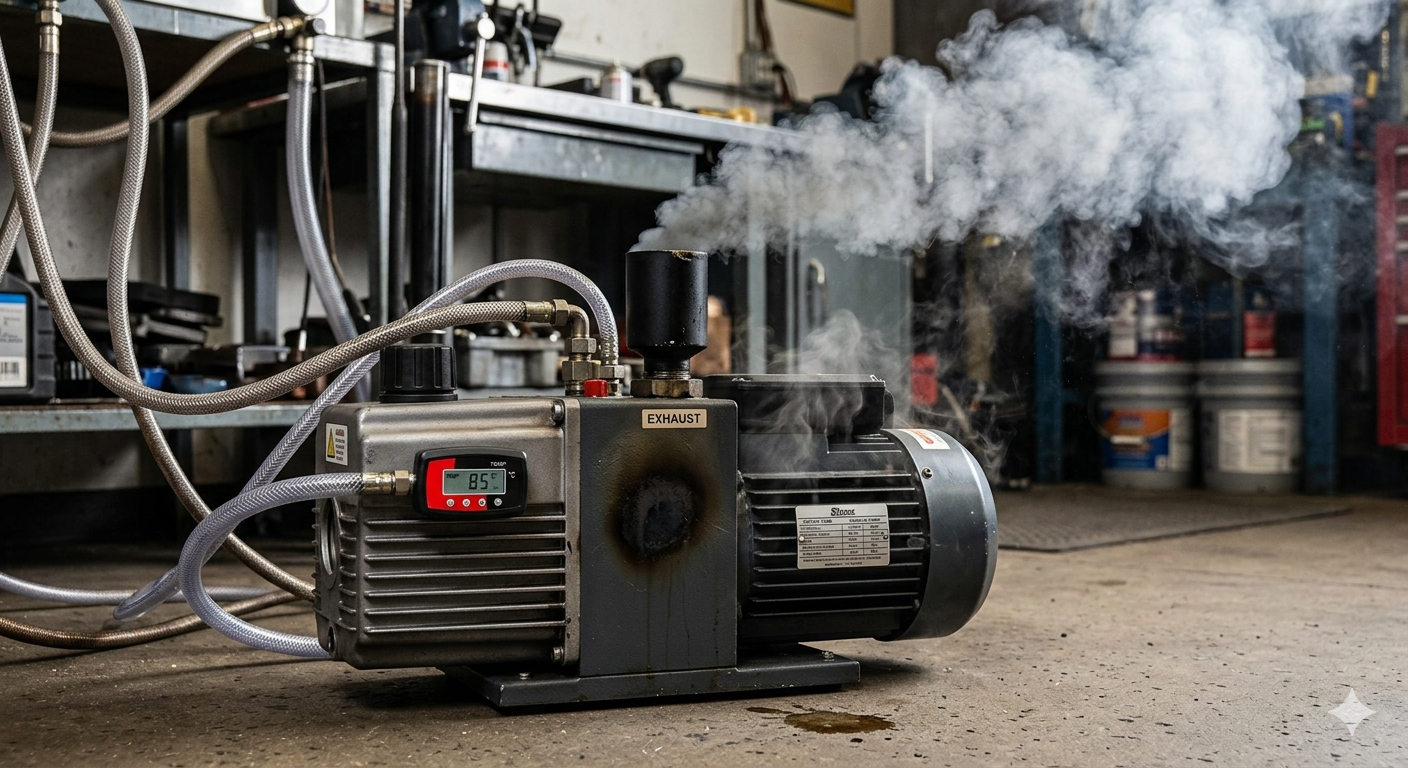
If your system shows the following symptoms, the current oil may not be suitable:
- Unstable vacuum performance
- Abnormally high pump temperature
- Oil smoke at the exhaust
- Rapid oil discoloration
- Poor ultimate pressure
- Unusual pump noise
- Longer vacuum cycle times
These warning signs should never be ignored if you want to avoid serious downtime and pump failure.
ULVAC Vietnam – Integrated Vacuum Solutions
As a leading brand in vacuum technology, ULVAC Vietnam not only supplies vacuum pumps but also provides consultation on selecting the right vacuum oil for each specific application.
Using the correct oil helps:
- Maintain stable vacuum performance
- Extend pump lifespan
- Reduce factory downtime
- Optimize Total Cost of Ownership (TCO)
In modern manufacturing, vacuum pump oil is not just a consumable—it is a critical factor that directly affects the reliability and stability of the entire vacuum system.
Conclusion
Many vacuum system failures are not caused by the pump itself, but by using the wrong vacuum oil.
A seemingly small decision can lead to:
- Unstable vacuum pressure
- Product contamination
- Damaged vanes and rotors
- Unexpected downtime
Instead of focusing only on oil price, manufacturers should prioritize:
- Compatibility with the vacuum system
- Actual operating conditions
- Technical recommendations from the manufacturer
In vacuum technology, choosing the right oil is always far less expensive than overhauling or replacing an entire vacuum pump system.
Contact ULVAC Vietnam today for professional consultation on your vacuum system requirements.