Heat exchangers play an important role in the automotive and HVAC industries. These devices transfer heat between different fluids, making the quality of each joint critical to overall product performance.
To meet manufacturing requirements, many manufacturers use vacuum brazing technology. This process joins multiple metal components in a controlled vacuum environment.
So, how does vacuum brazing work? Why is this technology used in heat exchanger manufacturing? Let’s explore these questions with ULVAC Vietnam in the following article.
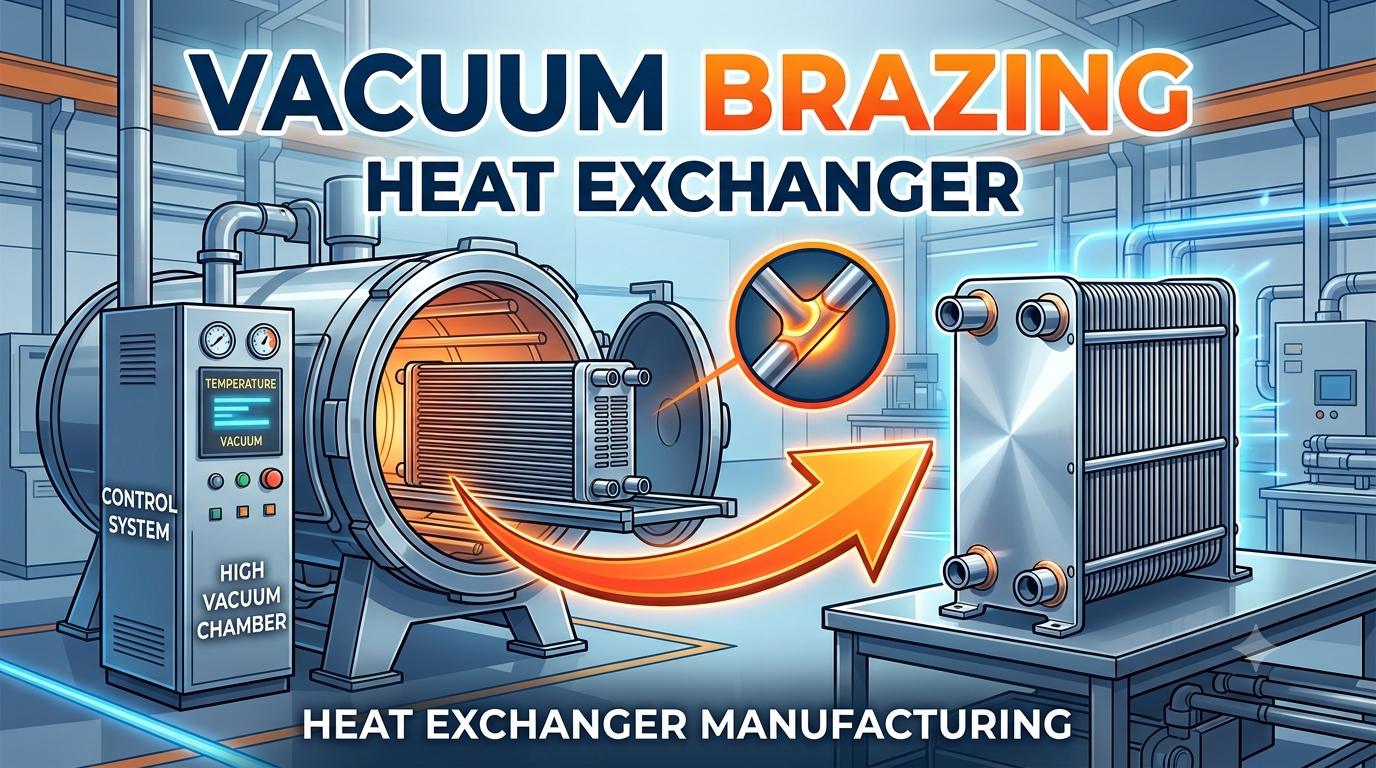
1. What Is Vacuum Brazing?
Vacuum brazing is a metal-joining process performed in a vacuum environment. During the process, a filler metal is heated to an appropriate temperature until it melts and flows into the gaps between the components being joined.
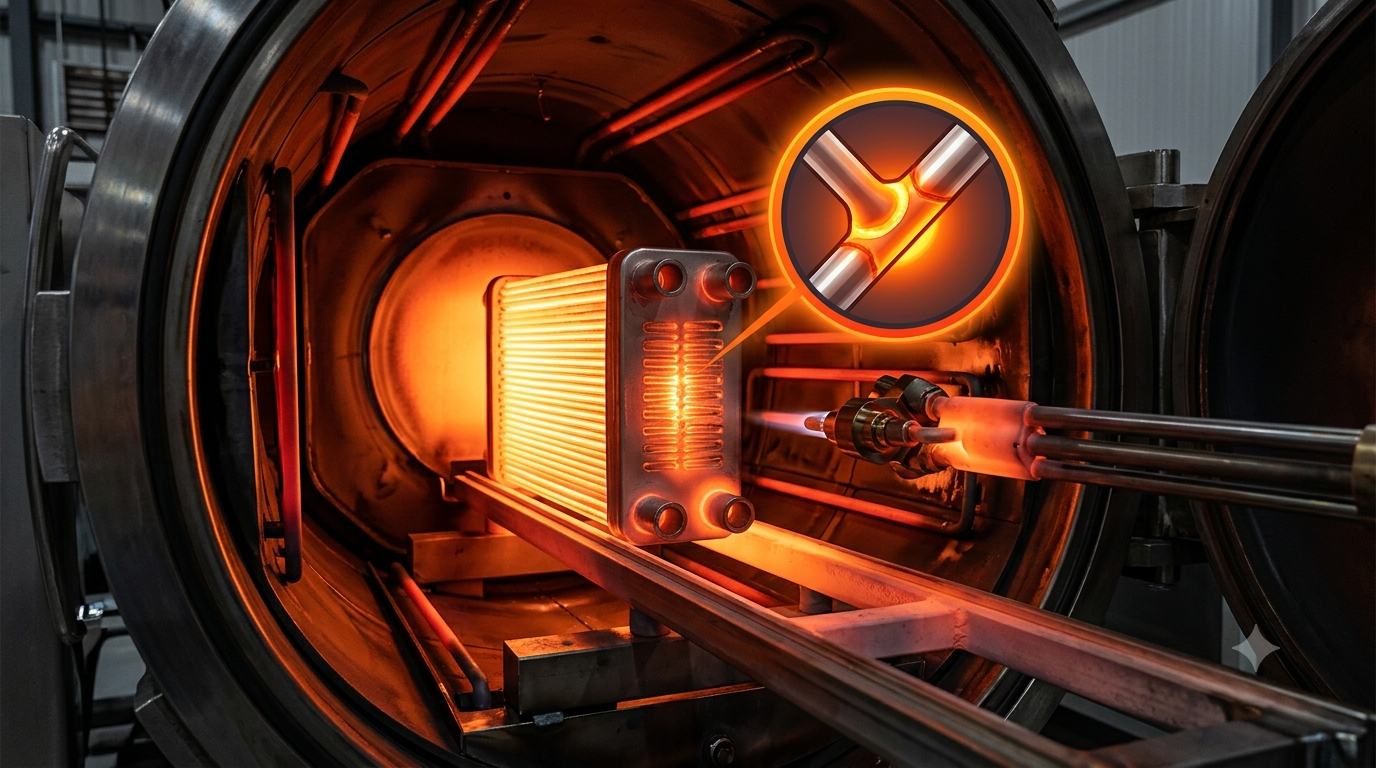
Unlike conventional fusion welding, vacuum brazing does not melt the base metals completely. Instead, the molten filler metal forms a bond between the component surfaces. Once cooled, the components are joined into a complete assembly.
The process takes place inside a vacuum furnace, where temperature and pressure are controlled according to a predefined process cycle.
Vacuum brazing is particularly suitable for complex metal assemblies. For example, manufacturers can use this technology to join metal plates, tubes, and fins in heat exchanger assemblies.
Note: The term “vacuum copper brazing” is sometimes used in industrial applications. However, the filler metal is not necessarily copper. The appropriate filler material must be selected based on the base metals and the specific product requirements.
2. Why Is Vacuum Brazing Used in Heat Exchanger Manufacturing?
2.1. Helps Achieve Leak-Tight Joints
Heat exchangers typically contain multiple passages for liquids or gases within a relatively compact structure. Therefore, the quality of the joints must be carefully controlled.
If a joint fails to meet the required specifications, leakage may occur, reducing heat transfer performance and compromising equipment reliability.
With an appropriate design and process, vacuum brazing can produce joints that meet specified leak-tightness requirements. However, the results depend on several factors, including the materials used, joint clearance, and brazing cycle.
This technology is considered for applications such as automotive radiators, exhaust gas recirculation (EGR) coolers, and industrial heat exchanger assemblies.
2.2. Suitable for Assemblies with Multiple Joints
A heat exchanger may contain hundreds of individual joints. Maintaining consistent joint quality is therefore an important requirement in mass production.
Vacuum brazing allows multiple joints to be processed within a single heating cycle, helping manufacturers reduce the need for separate joining operations.
In addition, this technology can accommodate assemblies with complex geometries. Depending on production volume and process requirements, manufacturers can select either batch furnaces or continuous production systems.
2.3. Helps Minimize Oxidation During Heating
When metal is heated in air, oxygen can react with its surface and form an oxide layer. This layer may interfere with the wetting and flow of the brazing filler metal.
A vacuum environment helps reduce the amount of residual gas inside the furnace, thereby limiting oxidation under suitable process conditions.
However, vacuum level is not the only factor that determines brazing quality. Surface cleanliness and filler metal selection are also essential.
2.4. Supports Consistent and Repeatable Processing
In mass production, manufacturers must maintain consistent quality from one batch to another. This requires precise control of process parameters.
Key parameters include heating temperature, holding time, and vacuum level. Product loading and component positioning inside the furnace can also affect the results.
When these parameters are properly established, manufacturers can improve process repeatability. Monitoring operating data also helps identify deviations at an early stage.
3. Industrial Applications of Vacuum Brazing
Vacuum brazing is used in various industrial sectors. The following are some representative applications.
3.1. Automotive Heat Exchanger Manufacturing
The automotive industry uses various types of heat exchangers, including radiators, EGR coolers, and specialized cooling assemblies.
These products often contain multiple fluid passages. Consequently, joint quality directly affects leak-tightness and equipment durability.
Vacuum brazing is one of the joining technologies that manufacturers may consider for these applications. The final selection depends on the materials and product design.
3.2. Air Conditioner Condenser and Evaporator Manufacturing
In the heating, ventilation, and air conditioning (HVAC) industry, heat exchangers facilitate heat transfer during air conditioning and heating operations. Metal components must be joined according to the specified product design.
For aluminum heat exchangers, manufacturers must carefully control temperature and filler material selection. The process must also meet the system’s leak-tightness requirements.
Depending on the product structure and materials, manufacturers may choose vacuum brazing or another suitable joining technology.
3.3. Industrial Cooling Equipment Manufacturing
Many industrial systems rely on heat exchangers to regulate operating temperatures. Applications include liquid cooling systems, gas processing equipment, and specialized machinery.
Vacuum brazing is worth considering when products contain multiple metal joints. However, the process must be evaluated against actual operating conditions and product specifications.
3.4. Manufacturing Cooling Modules for AI Data Centers
The rapid development of artificial intelligence (AI) is increasing demand for computing capacity in data centers. In particular, AI servers and high-performance graphics processing units (GPUs) generate substantial amounts of heat during operation. As a result, cooling systems play a critical role in maintaining equipment performance and operational stability.
One increasingly important approach is liquid cooling. This technology uses cooling modules, cold plates, and heat exchangers to transfer heat away from electronic components into a cooling fluid.
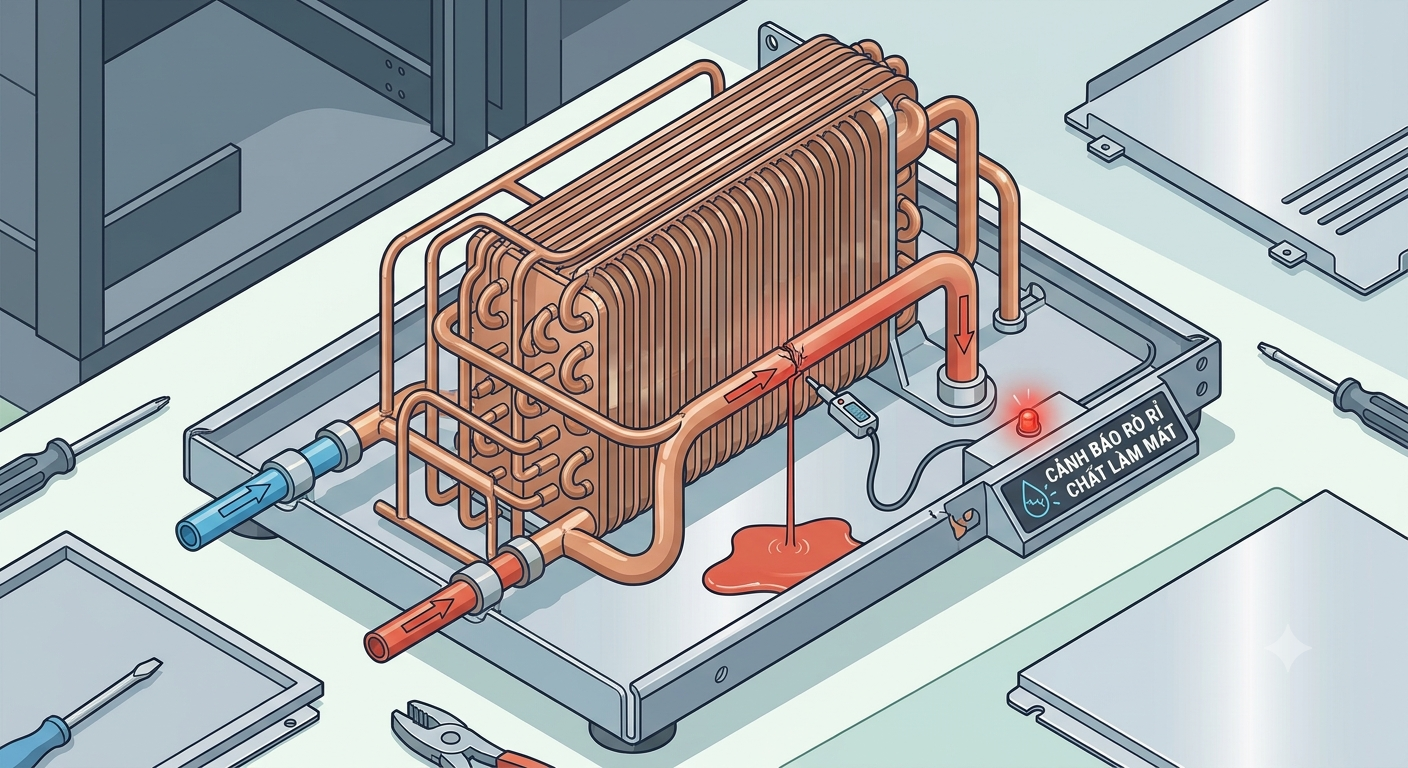
During manufacturing, certain metal components must be joined with high precision. Vacuum brazing may be suitable for specific components and heat exchangers, depending on the materials, fluid channel design, and operating requirements. The vacuum environment also helps minimize oxidation during heating.
Manufacturers must additionally control temperature, joint strength, and product leak-tightness. These factors are particularly important for cooling modules with multiple fluid channels or complex structures.
When properly selected and optimized, vacuum brazing can support the production of thermal management components for data center infrastructure and AI server cooling systems. However, the most appropriate joining method must be determined based on the specific design and technical requirements of each product.
4. Key Factors Affecting Vacuum Brazing Quality
To achieve the required joint quality, manufacturers must control several factors throughout the process.
Vacuum Level
The vacuum level must be appropriate for the materials and brazing process. There is no single pressure value that applies to every application.
Thermal Cycle
The heating temperature and holding time affect the melting and flow of the filler metal. The cooling rate must also be controlled according to the product requirements.
Surface Cleanliness
Oil, grease, dust, and other contaminants can compromise joint quality. Therefore, the cleaning process must follow validated procedures.
Joint Clearance
The gap between the components must be suitable for the filler metal and its wetting characteristics. If the clearance is inappropriate, the filler metal may not distribute evenly throughout the joint.
Post-Brazing Quality Inspection
After brazing, manufacturers must inspect the products according to the applicable quality standards. Inspection methods may include visual examination, leak testing, and pressure testing.
Overall, controlling these factors together helps reduce the risk of joint defects and supports more consistent product quality.
5. How to Select the Right Vacuum Brazing Furnace
When investing in a vacuum brazing furnace, manufacturers should look beyond the maximum operating temperature. Instead, they should evaluate the complete requirements of the production process.
Important selection criteria include:
- Product materials: Aluminum, copper, stainless steel, and other alloys have different processing characteristics.
- Product dimensions: These determine the required heating zone size and usable furnace chamber space.
- Production volume: This helps determine whether a batch furnace or continuous system is more suitable.
- Quality requirements: These may include leak-tightness, joint strength, and joint uniformity.
- Vacuum system performance: The system must achieve and maintain the vacuum level required by the process.
- Operating costs: These include energy consumption, maintenance expenses, and cycle time.
Manufacturers should also evaluate how the equipment can be integrated into their existing production lines. Discussing technical requirements at an early stage can help ensure a more appropriate equipment selection.
6. ULVAC Vacuum Brazing Furnace Solutions
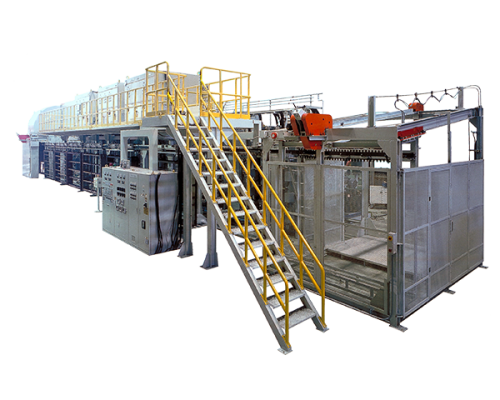
ULVAC provides vacuum furnace solutions for a wide range of industrial applications. The ULVAC FB Series Vacuum Brazing Furnaces are designed for vacuum brazing applications, including heat exchanger manufacturing.
Depending on the configuration, the systems can support batch processing or continuous production. The appropriate model should be selected based on the materials, product dimensions, and process requirements.
In Vietnam, ULVAC provides equipment installation and vacuum technology services. Manufacturers can contact ULVAC Vietnam to discuss their specific production requirements and evaluate suitable solutions.
For new production lines, defining product and process requirements at an early stage can make equipment selection more efficient. For existing production lines, the current operating conditions should be assessed before any changes are recommended.
Conclusion
Vacuum brazing is an important joining technology used in the manufacturing of various types of heat exchangers. It enables metal components to be joined in a controlled vacuum environment.
However, the final quality depends on the materials, product design, and operating conditions. Manufacturers should therefore select suitable equipment and carefully control the key process parameters.
ULVAC Vietnam is ready to discuss vacuum technology solutions for industrial manufacturing applications.
If your factory is planning a new production line or evaluating vacuum brazing technology, contact ULVAC Vietnam to explore a solution tailored to your technical requirements.